
In this recipe for cranberry wine, you will learn how a simple tart berry can become a beautiful homemade fruit wine with rich color and refreshing flavor. Cranberry wine is loved by home winemakers because it delivers a bright taste, a deep red appearance, and a balanced mix of sweetness and natural acidity.
Many people searching for a reliable recipe for cranberry wine want something simple, clear, and beginner friendly. The good news is that cranberry wine is one of the easiest fruit wines to make at home. With basic ingredients and a little patience during fermentation, you can produce a delicious homemade wine that tastes impressive and unique.
Cranberries naturally bring a bold tart flavor that makes this wine refreshing rather than overly sweet. When sugar and fermentation are balanced correctly, the result is a smooth wine with a crisp finish. This is why homemade cranberry wine is especially popular during fall and winter, though many people enjoy it year round.
Another reason cranberry wine stands out is its versatility. Home brewers often customize the flavor with natural additions such as citrus peel, spices, or honey. These small adjustments allow each batch to develop its own character while still keeping the bright cranberry profile.
People across the United States enjoy making fruit wine at home because it allows them to experiment with seasonal ingredients while learning traditional fermentation techniques. Cranberry wine fits perfectly into this trend since cranberries are widely available fresh or frozen and they produce a striking ruby colored wine.
In this guide you will discover everything needed to make cranberry wine successfully. You will learn about ingredients, equipment, fermentation time, flavor variations, and proper storage so your homemade wine turns out smooth, balanced, and enjoyable
What Is Cranberry Wine and Why People Love It
Cranberry wine is a type of fruit wine made by fermenting cranberries with sugar, water, and wine yeast. During fermentation, yeast converts sugar into alcohol, creating a flavorful beverage with a vibrant red color and a refreshing taste. Unlike grape wines, fruit wines rely on the natural character of the fruit, which gives cranberry wine its distinctive tart and crisp profile.
One reason many people search for a cranberry wine recipe is the unique flavor. Cranberries naturally contain bright acidity that gives the wine a refreshing finish. When properly balanced with sugar, the final wine becomes smooth, slightly sweet, and pleasantly tangy.
Cranberry wine also has several characteristics that make it popular among home winemakers.
• Deep ruby color that looks beautiful in the glass
• Bright and refreshing taste with balanced acidity
• Pleasant aroma with fruity and slightly floral notes
• Flexible recipe that allows creative flavor additions
Because cranberries are naturally tart, they create a wine that feels lighter and more refreshing compared with many homemade wines. This makes it a great choice for people who enjoy fruit forward wines rather than heavy wines.
Another advantage is availability. Cranberries are easy to find across the United States, especially during fall and winter. They can be used fresh or frozen, which makes this fruit wine recipe convenient for home brewing at any time of the year.
Cranberry wine also pairs nicely with food. The crisp acidity complements roasted poultry, cheese boards, and holiday meals. Many home brewers enjoy serving it during gatherings because the color and flavor feel festive and memorable.
Learning how to make cranberry wine is also a great way for beginners to understand the basics of fruit wine fermentation. The process teaches important steps such as fruit preparation, sugar balance, fermentation timing, and proper aging.Taco Mac Ranch Recipe: What you need to Know
Section 3: Ingredients Needed for Cranberry Wine
Making cranberry wine at home requires only a handful of simple ingredients. Each ingredient plays an important role in fermentation, flavor balance, and the final quality of the wine. When these ingredients are combined properly, they create a smooth and refreshing homemade fruit wine.
Below is a clear overview of the essential ingredients used in a cranberry wine recipe.
| Ingredient | Purpose in the Wine | Typical Amount for One Gallon |
|---|---|---|
| Fresh or frozen cranberries | Provides flavor, color, and natural acidity | 3 to 4 cups |
| Granulated sugar | Feeds yeast and determines alcohol level | 2 to 3 pounds |
| Water | Helps extract flavor and creates the wine base | About 1 gallon |
| Wine yeast | Converts sugar into alcohol during fermentation | 1 packet |
| Yeast nutrient | Supports healthy fermentation | 1 teaspoon |
| Campden tablet | Helps sanitize the mixture and control wild yeast | 1 tablet |
| Acid blend or lemon juice | Balances flavor and acidity | Optional small amount |
Cranberries are the star ingredient in this fruit wine recipe. Their natural tartness creates the crisp character that cranberry wine is known for. Many winemakers slightly crush the berries before fermentation to help release their juices and color.
Sugar is equally important because cranberries contain less natural sugar than grapes. The added sugar ensures proper fermentation and determines how strong the wine will become.
Wine yeast is responsible for fermentation. Different yeast strains can influence aroma, sweetness, and overall flavor. Many home brewers choose yeast designed for fruit wines because it helps preserve the fresh berry character.
Yeast nutrient helps yeast remain active during fermentation. Since cranberries do not contain enough natural nutrients for yeast, adding this ingredient helps prevent slow or stuck fermentation.
Water dilutes the cranberry juice and allows the yeast to ferment the mixture properly. Without enough water, the wine would be overly acidic.
Using quality ingredients is one of the most important steps when learning how to make cranberry wine. Fresh cranberries, clean water, and proper yeast will significantly improve the final flavor and clarity of the wine.
Equipment Required for Homemade Cranberry Wine
Before starting your cranberry wine recipe, it is important to prepare the basic equipment used in home winemaking. The right tools help ensure clean fermentation, proper air control, and safe storage while the wine develops its flavor.
Most of the equipment needed for homemade cranberry wine is simple and reusable. Many beginners purchase a small fruit wine kit that includes the essential items.
Below is a helpful overview of the common equipment used when learning how to make cranberry wine.
| Equipment | Purpose |
|---|---|
| Fermentation bucket | Holds the cranberry mixture during the early fermentation stage |
| Glass carboy or fermenting jug | Used for secondary fermentation and aging |
| Airlock and stopper | Allows gas to escape while preventing air and bacteria from entering |
| Large spoon or mash tool | Helps crush cranberries and mix ingredients |
| Straining bag or cheesecloth | Separates fruit solids from the liquid |
| Siphon tube | Transfers wine between containers without disturbing sediment |
| Bottles and corks | Used to store finished cranberry wine |
The fermentation bucket is used during the first stage when the crushed cranberries, water, sugar, and yeast begin fermenting. This stage often produces bubbles and foam, so the bucket allows extra space for the mixture to expand safely.
After the initial fermentation slows down, the wine is transferred into a glass carboy or fermenting jug. This step is known as secondary fermentation. The wine continues developing flavor while sediment slowly settles at the bottom.
An airlock is one of the most important pieces of equipment. It releases carbon dioxide produced during fermentation while keeping outside air from contaminating the wine.
A siphon tube helps move the wine from one container to another without disturbing sediment. This process improves clarity and helps produce a smoother homemade cranberry wine.
Cleanliness is critical during the entire process. All equipment should be sanitized before use to prevent unwanted bacteria or wild yeast from affecting the wine.
Once you have these tools ready, you can begin the most exciting part of the process, preparing and fermenting your cranberry wine step by step.
Recipe for Cranberry Wine Step by Step Guide
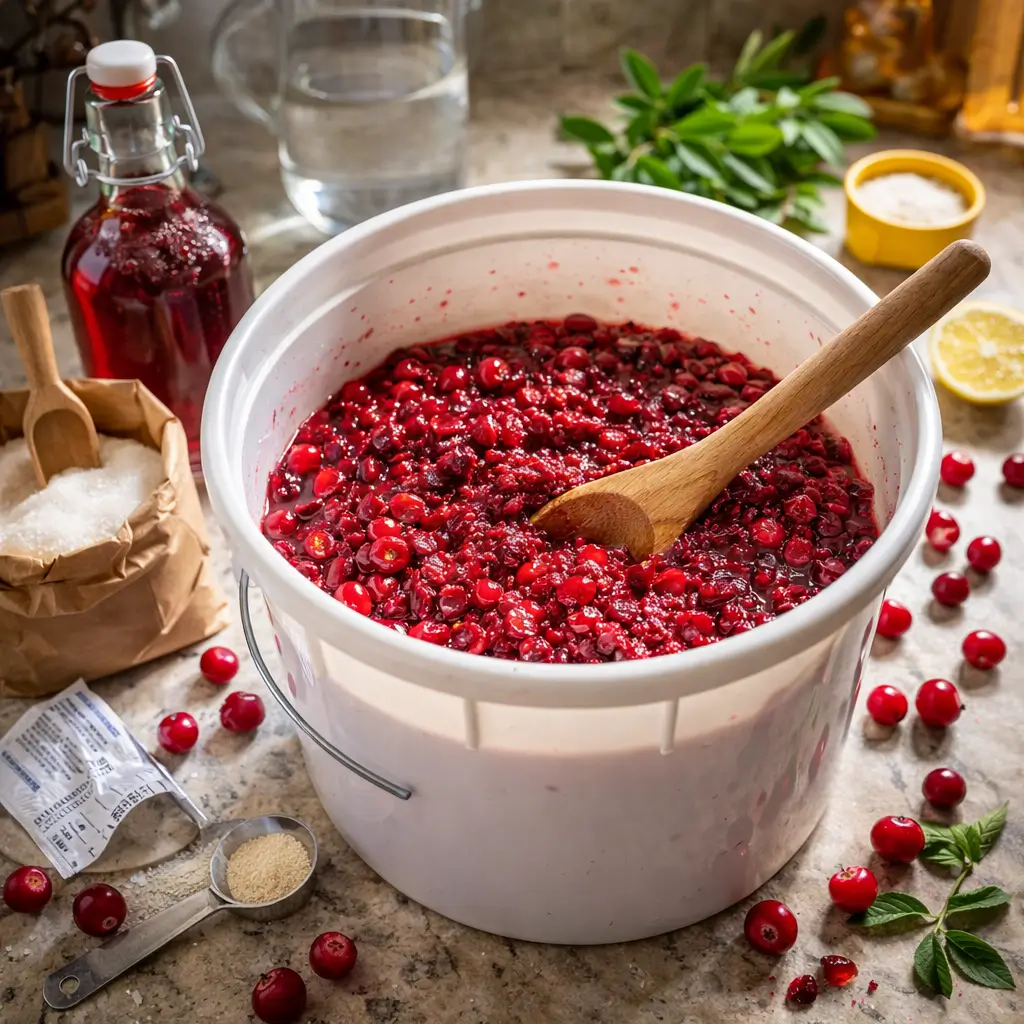
This recipe for cranberry wine shows the full process of turning fresh cranberries into a smooth homemade fruit wine. The method is beginner friendly and follows the traditional steps used in fruit wine fermentation.
Ingredients
• 4 cups fresh or frozen cranberries
• 2½ pounds sugar
• 1 gallon clean water
• 1 packet wine yeast
• 1 teaspoon yeast nutrient
• 1 crushed Campden tablet
• Optional lemon juice for extra acidity balance
Equipment
• Fermentation bucket
• Straining bag or cheesecloth
• Large spoon for mixing
• Glass fermentation jug
• Airlock and stopper
• Siphon tube
• Wine bottles and corks
Step by Step Preparation
- Prepare the cranberries
Wash the cranberries thoroughly. Lightly crush them using a spoon or potato masher so the juice and flavor can release more easily during fermentation. - Create the cranberry mixture
Place the crushed cranberries inside a straining bag and put the bag into the fermentation bucket. Add the sugar and pour hot water over the mixture. Stir until the sugar dissolves completely. - Add stabilizing ingredients
Add the crushed Campden tablet and yeast nutrient. Stir well and allow the mixture to sit for about twenty four hours. This step helps remove unwanted microorganisms before fermentation begins. - Add the yeast
After twenty four hours, sprinkle the wine yeast over the mixture and stir gently. Cover the fermentation bucket with a clean cloth or lid fitted with an airlock. - Primary fermentation
Allow the mixture to ferment for about five to seven days. Stir the mixture once daily to keep the cranberries submerged and help release more flavor. - Transfer to secondary fermentation
Remove the straining bag with the cranberry solids and gently press it to extract remaining juice. Transfer the liquid into a glass fermentation jug using a siphon tube. - Attach the airlock
Seal the jug with an airlock and stopper. The wine will continue fermenting slowly for several weeks as carbon dioxide escapes through the airlock. - Aging stage
After fermentation slows and sediment settles, transfer the wine again using the siphon tube. This process improves clarity and flavor as the wine ages.
Following this cranberry wine recipe carefully helps ensure proper fermentation and a clean fruit forward flavor. Patience during fermentation and aging is one of the most important factors in producing a high quality homemade cranberry wine.
Fermentation Timeline for Cranberry Wine
Understanding the fermentation timeline is essential when following a recipe for cranberry wine. Fermentation is the stage where yeast converts sugar into alcohol and develops the flavor that makes homemade cranberry wine enjoyable. While the exact timing can vary depending on temperature and yeast activity, most batches follow a predictable schedule.
Below is a simple timeline that helps explain how cranberry wine develops during fermentation.
| Stage | Time Frame | What Happens |
|---|---|---|
| Primary fermentation | Day 1 to Day 7 | Yeast becomes very active and bubbles appear as sugar begins turning into alcohol |
| Secondary fermentation | Week 2 to Week 5 | Fermentation slows and the wine starts clearing as sediment settles |
| Clarifying and aging | Month 2 to Month 3 | The wine becomes smoother and the cranberry flavor develops further |
During the first stage, the cranberry mixture ferments rapidly. Bubbles form as carbon dioxide is released, and this is a sign that the recipe for cranberry wine is progressing correctly. Stirring the mixture daily during the early stage helps extract flavor from the fruit.
After several days, the wine is transferred into a fermentation jug with an airlock. This stage is slower but very important for improving clarity and stability. Many people who follow a recipe for cranberry wine notice that the bubbling gradually becomes less frequent as fermentation finishes.
Temperature also plays an important role. Homemade cranberry wine usually ferments best in a room between sixty five and seventy five degrees Fahrenheit. Cooler environments may slow fermentation, while very warm temperatures can affect flavor.
Patience is one of the most important parts of a successful recipe for cranberry wine. Even though fermentation may appear finished after a few weeks, allowing the wine to age slightly longer improves smoothness and balance.
By understanding the fermentation timeline, beginners can feel confident that their recipe for cranberry wine is developing correctly and will produce a flavorful homemade fruit wine.
Bottling and Storing Cranberry Wine
After fermentation finishes, the next step in a recipe for cranberry wine is bottling and proper storage. This stage helps protect the flavor, improve clarity, and allow the wine to mature. Careful bottling ensures your homemade cranberry wine stays fresh and enjoyable for months or even years.
Before bottling, the wine should appear clear and free from active bubbling. If sediment is visible at the bottom of the container, transfer the wine carefully using a siphon tube. This step keeps the sediment out of the finished wine and improves the final quality of the recipe for cranberry wine.
Follow these basic steps for bottling.
• Sanitize all bottles, corks, and equipment before use
• Place the fermentation jug on a higher surface than the bottles
• Use a siphon tube to transfer the wine slowly into bottles
• Leave a small space at the top of each bottle
• Seal the bottles securely with corks
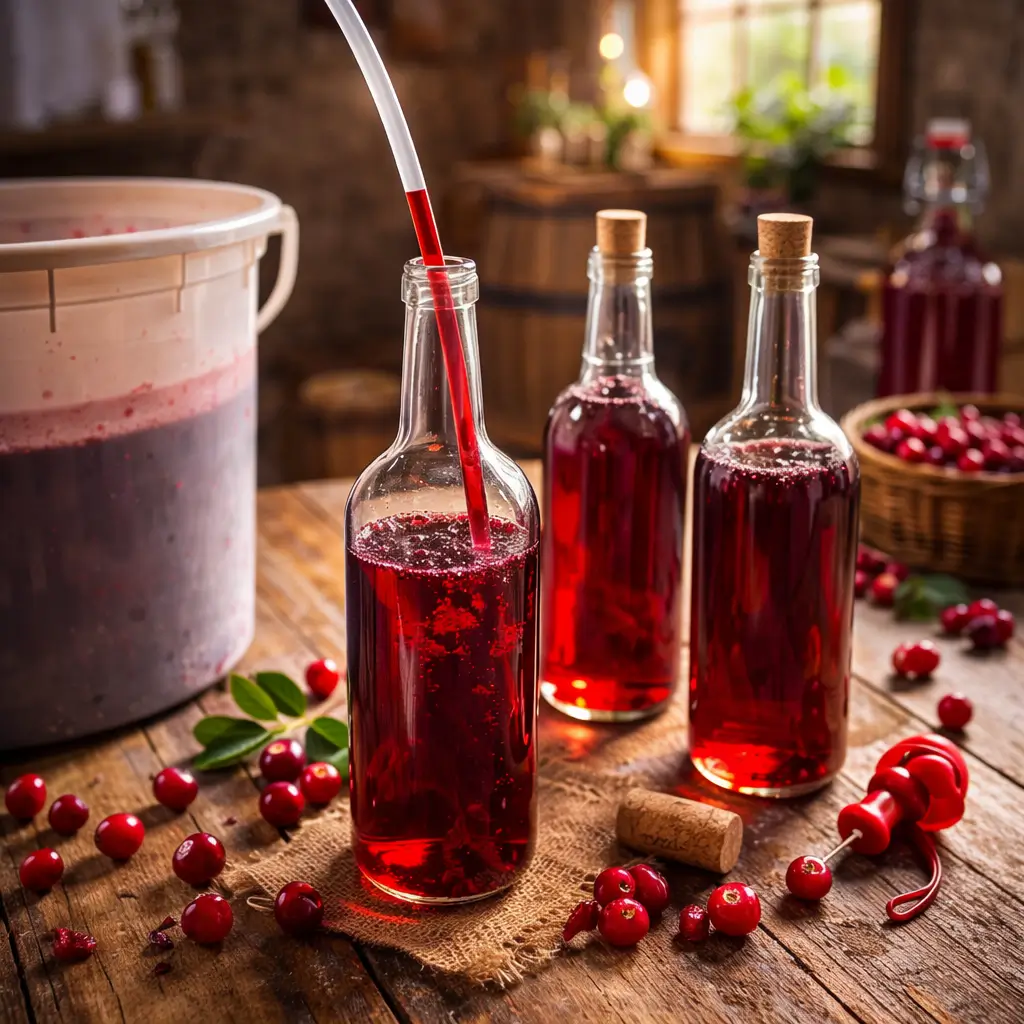
Once the wine is bottled, storage becomes important for maintaining the results of your recipe for cranberry wine. Bottles should be kept in a cool, dark place where temperature remains stable. Excess heat or direct sunlight can affect both flavor and color.
A storage temperature between fifty five and sixty five degrees Fahrenheit works well for most homemade wines. Keeping bottles lying on their side also helps maintain cork moisture, which prevents air from entering the bottle.
Even though cranberry wine can be tasted shortly after bottling, many home winemakers prefer aging it for a few months. During this time the flavors soften and the tart cranberry notes become more balanced.
The patience invested in a recipe for cranberry wine during fermentation and aging often leads to a smoother and more refined drink. With proper storage, homemade cranberry wine can continue improving in flavor for a year or more.
Tips for Making the Best Cranberry Wine
Following a recipe for cranberry wine carefully will already give you good results, but a few expert tips can help improve flavor, clarity, and fermentation success. Many experienced home winemakers rely on small adjustments that make a big difference in the final quality of homemade cranberry wine.
One of the most important tips when using a recipe for cranberry wine is choosing good quality cranberries. Fresh cranberries often provide brighter flavor, but frozen cranberries also work well because freezing helps break the fruit skin and release more juice during fermentation.
Another helpful tip for a recipe for cranberry wine is proper sanitation. Every piece of equipment that touches the wine should be thoroughly cleaned and sanitized. This step protects the wine from unwanted bacteria and ensures the yeast can ferment properly.
Here are several practical tips that help improve a recipe for cranberry wine.
• Lightly crush cranberries before fermentation to release more flavor
• Use wine yeast designed for fruit wines for better aroma and balance
• Maintain a steady fermentation temperature between sixty five and seventy five degrees Fahrenheit
• Avoid rushing the aging stage so the wine becomes smoother
• Taste the wine during aging to understand how the flavor develops
Sugar balance also plays a major role in the success of a recipe for cranberry wine. Because cranberries are naturally tart, adding the right amount of sugar creates a smoother flavor and proper alcohol level.
Patience is another key factor. Many beginners expect homemade cranberry wine to be ready quickly, but allowing the wine to age for several months often produces a much better result. The cranberry flavor becomes softer and more balanced over time.
Another useful technique in a recipe for cranberry wine is gentle racking. This process transfers the wine away from sediment during aging. Racking helps improve clarity and prevents unwanted flavors from developing.
By applying these simple tips, anyone following a recipe for cranberry wine can produce a homemade fruit wine that tastes cleaner, smoother, and more refined.
Flavor Variations to Enhance Cranberry Wine
One reason many people enjoy using a recipe for cranberry wine is the ability to customize the flavor. Cranberries have a bright tart taste that blends well with many natural ingredients. By adding small flavor variations, you can create a unique version of homemade cranberry wine while still following the basic recipe for cranberry wine process.
These additions are usually introduced during the early fermentation stage so the flavors can blend naturally as the wine develops.
Here are some popular flavor variations often used with a recipe for cranberry wine.
| Flavor Addition | How It Affects the Wine | When to Add |
|---|---|---|
| Orange peel | Adds citrus aroma and balances tartness | During primary fermentation |
| Cinnamon stick | Creates warm spice notes often enjoyed in winter wines | Early fermentation |
| Honey | Adds natural sweetness and smoother texture | Replace part of the sugar |
| Vanilla bean | Introduces soft and subtle sweetness | Secondary fermentation |
| Cloves | Adds mild spice and depth to the flavor | Use very small amounts |
Orange peel is one of the most common additions used in a recipe for cranberry wine. The citrus aroma pairs naturally with cranberry flavor and helps soften the tart edge of the fruit.
Honey is another popular option. Some home winemakers replace part of the sugar with honey to produce a smoother and slightly floral character in their homemade cranberry wine.
Spices such as cinnamon or cloves can give cranberry wine a seasonal feel. These ingredients are especially popular when people prepare cranberry wine for fall gatherings or holiday meals.
When experimenting with variations in a recipe for cranberry wine, it is best to start with small amounts. Strong spices can easily dominate the flavor if too much is added.
Keeping notes during each batch can help you refine your recipe for cranberry wine over time. Small adjustments allow you to develop a personalized fruit wine recipe that matches your taste preferences.
How Long Cranberry Wine Takes to Ferment
One of the most common questions people ask when following a recipe for cranberry wine is how long fermentation will take. The process does require patience, but understanding the timeline helps home winemakers know what to expect while their homemade cranberry wine develops.
Most batches made with a recipe for cranberry wine complete fermentation in several stages. Each stage contributes to flavor, alcohol development, and clarity.
The first stage is primary fermentation. In a typical recipe for cranberry wine this stage lasts about five to seven days. During this time the yeast is very active and you will notice frequent bubbling and foam as sugar begins converting into alcohol.
After the initial stage, the wine is transferred into a fermentation jug with an airlock. This is called secondary fermentation. In a recipe for cranberry wine this stage usually continues for three to five weeks. Bubbling slows gradually as the yeast finishes converting remaining sugar.
Several factors can influence how long a recipe for cranberry wine takes to ferment.
• Temperature of the fermentation area
• Activity level of the yeast strain
• Amount of sugar used in the recipe for cranberry wine
• Nutrient levels available for the yeast
Most home winemakers keep fermentation temperatures between sixty five and seventy five degrees Fahrenheit. This range helps yeast remain active without producing unwanted flavors.
Even when bubbling stops, the recipe for cranberry wine is not completely finished. The wine usually benefits from additional aging time so sediment can settle and the flavor can become smoother.
Many experienced brewers allow their recipe for cranberry wine to age for two to three months before bottling. Some even age the wine longer to achieve a more refined and balanced flavor.
Patience is one of the most important ingredients in any recipe for cranberry wine. Allowing the wine enough time to ferment and mature will produce a clearer, smoother, and more enjoyable homemade cranberry wine.
How to Store Homemade Cranberry Wine Properly
Proper storage is an important part of every recipe for cranberry wine. After fermentation and bottling are complete, the way you store the wine will influence its flavor, clarity, and overall quality. Good storage conditions allow homemade cranberry wine to mature slowly and develop a smoother taste.
When a recipe for cranberry wine is finished and bottled, the bottles should be placed in a cool and dark environment. Light and heat can damage wine over time, so keeping bottles away from sunlight helps protect the color and aroma.
Below are several recommended storage practices that help preserve the results of a recipe for cranberry wine.
• Store bottles in a cool space with stable temperature
• Keep bottles away from direct sunlight
• Lay bottles on their side if they are sealed with corks
• Avoid frequent movement that can disturb sediment
• Label bottles with the date of your recipe for cranberry wine
Temperature plays a major role in storage. Most homemade wines, including those made with a recipe for cranberry wine, store well between fifty five and sixty five degrees Fahrenheit. Consistent temperature helps maintain the structure and flavor of the wine.
Humidity can also affect storage conditions. If corked bottles become too dry, air may slowly enter the bottle and affect the wine. Keeping bottles on their side helps keep corks slightly moist and properly sealed.
Many people notice that their recipe for cranberry wine improves with time. Aging allows the tart cranberry flavor to soften and blend more smoothly with the alcohol and natural fruit aromas.
Some batches of homemade cranberry wine taste good after a few months, but others may continue improving for up to a year. Because of this, many home winemakers set aside a few bottles from each recipe for cranberry wine to taste later as the wine matures.
With proper storage, your homemade cranberry wine can remain flavorful and enjoyable long after the fermentation process is finished.
Common Mistakes to Avoid When Making Cranberry Wine
Even when following a recipe for cranberry wine carefully, beginners sometimes encounter small problems that affect flavor or fermentation. Understanding the most common mistakes helps ensure that your homemade cranberry wine turns out smooth, balanced, and enjoyable.
One common mistake when preparing a recipe for cranberry wine is skipping proper sanitation. Any equipment used during fermentation must be thoroughly cleaned. If tools are not sanitized, unwanted bacteria may interfere with the fermentation process and affect the quality of the wine.
Another issue people encounter in a recipe for cranberry wine is incorrect sugar balance. Cranberries are naturally very tart, so the correct amount of sugar is necessary for both fermentation and flavor balance. Too little sugar can result in weak fermentation, while too much sugar may slow the yeast activity.
Below are several mistakes that should be avoided when following a recipe for cranberry wine.
• Using damaged or spoiled cranberries
• Fermenting in an environment that is too warm or too cold
• Opening the fermentation container too often
• Skipping yeast nutrient during fermentation
• Bottling the wine before fermentation is fully complete
Temperature control is especially important in a recipe for cranberry wine. Yeast performs best within a moderate temperature range. If fermentation becomes too warm, the wine may develop harsh flavors.
Another mistake is rushing the aging stage. Many beginners want to taste their wine quickly, but allowing time for aging helps the recipe for cranberry wine develop smoother flavor and better clarity.
Improper racking is another issue that sometimes affects homemade cranberry wine. When transferring the wine between containers, it is important to avoid disturbing the sediment. Careful siphoning helps keep the wine clear and prevents unwanted bitterness.
By avoiding these mistakes, anyone following a recipe for cranberry wine can greatly improve the chances of producing a successful and flavorful homemade fruit wine.
Frequently Asked Questions About Cranberry Wine
Many beginners searching for a recipe for cranberry wine have similar questions about ingredients, fermentation, flavor, and equipment. Understanding these common topics helps make the process of making homemade cranberry wine easier and more successful.
Below are helpful answers related to the most common concerns people have when following a recipe for cranberry wine.
| Question | Answer |
|---|---|
| Can cranberry wine be made with frozen cranberries | Yes. Many people use frozen cranberries in a recipe for cranberry wine. Freezing actually helps break the fruit skin, which releases more juice during fermentation. |
| What does cranberry wine taste like | A recipe for cranberry wine usually produces a drink that is slightly tart, lightly sweet, and refreshing. The flavor is bright and fruity with a smooth finish. |
| How strong is homemade cranberry wine | Most batches made from a recipe for cranberry wine reach an alcohol level between 10 percent and 13 percent depending on the amount of sugar used. |
| Do I need special equipment | Basic fermentation tools such as a fermentation container, airlock, and bottles are recommended for a successful recipe for cranberry wine. |
| How long does cranberry wine last | When stored properly, bottles from a recipe for cranberry wine can remain good for one year or more while continuing to develop flavor. |
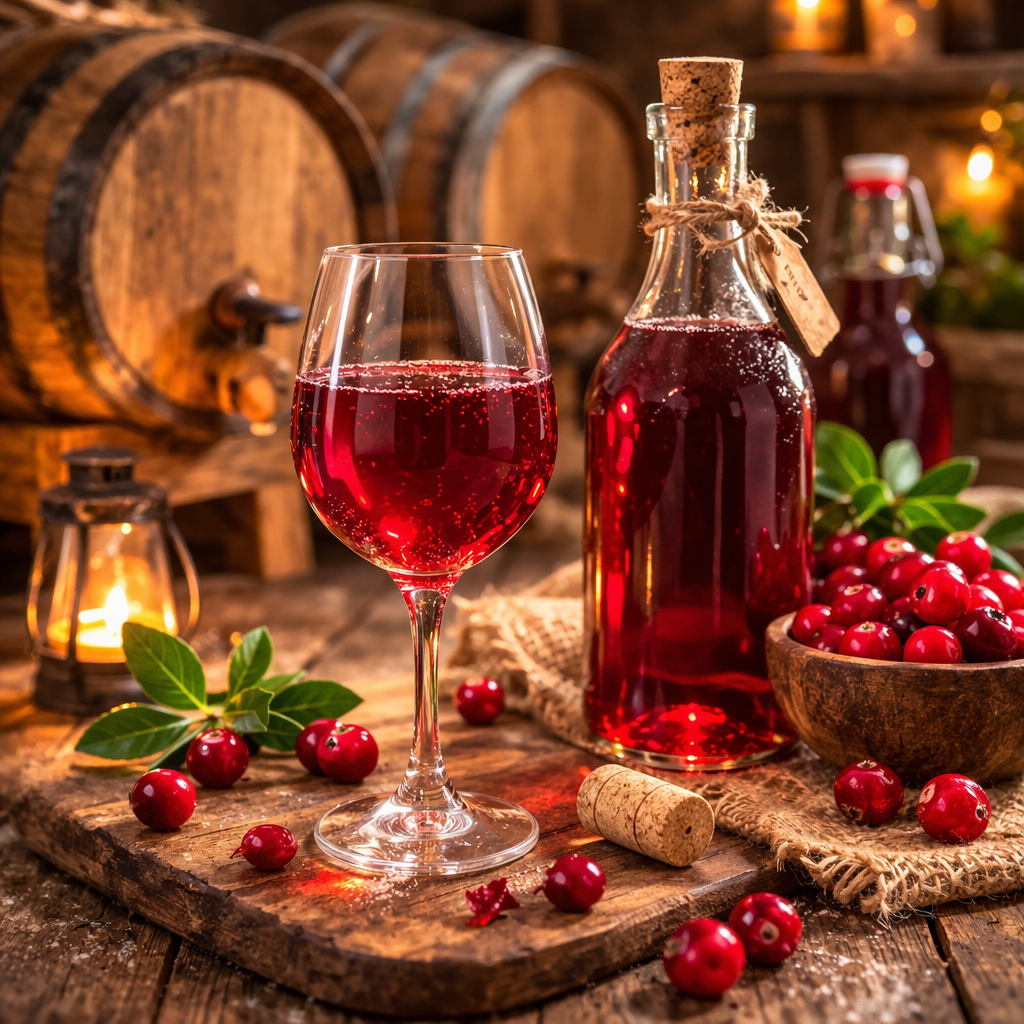
Many people who try their first recipe for cranberry wine discover that the process is simpler than expected. With proper fermentation and patience, homemade cranberry wine can become a rewarding and enjoyable project.
Home winemaking also allows people to experiment with flavors and develop their own unique recipe for cranberry wine over time. Small adjustments in ingredients or fermentation conditions can create noticeable differences in the final taste.
Because cranberries provide strong natural flavor and color, they are one of the most popular fruits used in homemade fruit wine recipes. Following a reliable recipe for cranberry wine makes it easier for beginners to achieve consistent results.
Conclusion
Making cranberry wine at home is a rewarding experience that combines simple ingredients with traditional fermentation techniques. By following a reliable recipe for cranberry wine, anyone can transform fresh or frozen cranberries into a vibrant homemade fruit wine with refreshing flavor and beautiful color.
The process begins with selecting quality cranberries, balancing sugar, and allowing yeast to ferment the mixture slowly. During fermentation the natural tartness of cranberries develops into a smooth and balanced wine that continues improving with aging. Patience during this process helps produce better clarity, aroma, and overall flavor.
One of the greatest advantages of a recipe for cranberry wine is flexibility. Home winemakers can experiment with ingredients such as citrus peel, spices, or honey to create unique variations that match personal taste preferences.
With proper fermentation, careful bottling, and correct storage conditions, homemade cranberry wine can remain enjoyable for many months. For beginners interested in fruit wine recipes, cranberry wine offers a simple and satisfying introduction to home winemaking while producing a delicious drink worth sharing.
FAQ
Can I make cranberry wine with fresh cranberries only ?
Yes, fresh cranberries work very well in a recipe for cranberry wine and often produce bright flavor and strong color. Many home winemakers prefer fresh berries because they contain natural acidity that helps give cranberry wine its crisp taste. The berries should be washed thoroughly and lightly crushed so the juice can release during fermentation. Frozen cranberries can also be used when fresh berries are not available. Both options can produce excellent homemade cranberry wine when the fermentation process is followed correctly.
How long does it take to make cranberry wine at home ?
A typical recipe for cranberry wine requires several stages that take time to complete. Primary fermentation usually lasts about five to seven days while yeast actively converts sugar into alcohol. Secondary fermentation normally continues for three to five weeks as the wine clears and fermentation slows. After that stage, aging for two to three months helps improve flavor and smoothness. Some home winemakers allow even longer aging to produce a more refined homemade cranberry wine.
What does homemade cranberry wine taste like ?
When prepared with a good recipe for cranberry wine, the finished drink usually has a bright and refreshing flavor. The natural tartness of cranberries creates a crisp taste that is balanced with sweetness from sugar used during fermentation. Many people describe the flavor as fruity, slightly tangy, and smooth with a clean finish. Aging the wine for several months often softens the sharp acidity and produces a more balanced and enjoyable homemade cranberry wine.
Do I need special equipment to make cranberry wine ?
Most beginners can follow a recipe for cranberry wine using simple home winemaking equipment. Common tools include a fermentation container, airlock, fermentation jug, siphon tube, and bottles for storage. These tools help control the fermentation environment and protect the wine from contamination. Many home brewing stores sell beginner fruit wine kits that include these basic items. With proper cleaning and sanitation, these tools can be reused for many batches of homemade cranberry wine.
How strong is homemade cranberry wine ?
The alcohol level produced by a recipe for cranberry wine depends mainly on the amount of sugar used during fermentation. In most homemade fruit wine recipes, cranberry wine reaches an alcohol content between ten percent and thirteen percent. This level is similar to many traditional wines. Adjusting sugar levels can slightly increase or decrease the strength, but it is important to maintain balance so the flavor of the cranberry wine remains smooth and enjoyable.
Follow US Facebook
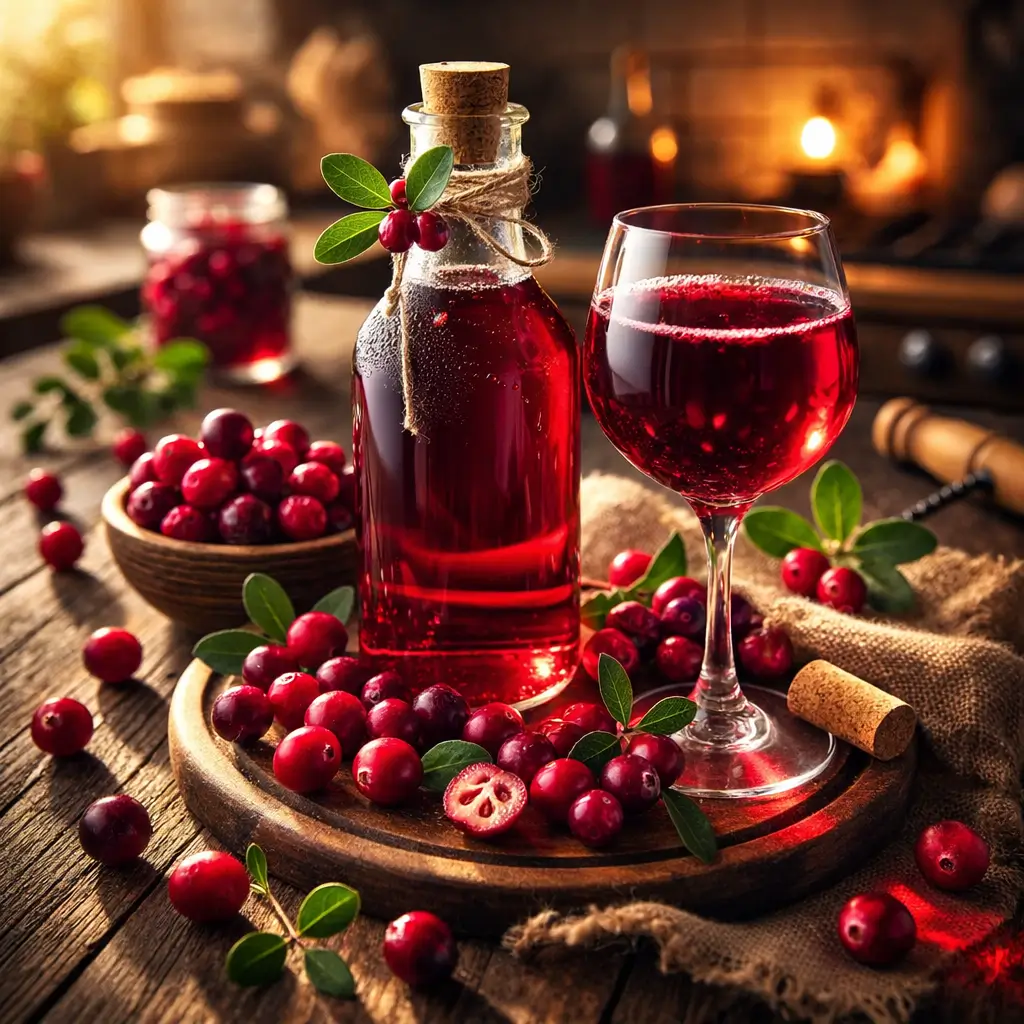
recipe for cranberry wine
Ingredients
Equipment
Method
- Wash cranberries thoroughly and lightly crush them to release juice.
- Place crushed cranberries into a straining bag inside the fermentation bucket.
- Add sugar and pour hot water over the mixture, stirring until dissolved.
- Add yeast nutrient and the crushed Campden tablet. Let the mixture rest for twenty four hours.
- Sprinkle wine yeast over the mixture and stir gently.
- Allow primary fermentation for about five to seven days while stirring daily.
- Remove cranberry solids and transfer the liquid to a fermentation jug.
- Attach the airlock and allow secondary fermentation for several weeks.
- When fermentation finishes, siphon the wine into clean bottles.
- Store bottles in a cool dark place and allow the wine to age before drinking.