
For centuries people what are cloves good for have wondered about the power hidden inside this small spice. Cloves may appear simple, yet they contain a remarkable concentration of natural compounds that support health in many ways. From traditional medicine to modern nutrition research, cloves continue to attract attention for their wide range of benefits.
In many modern health discussions today what are cloves good for is a question that appears frequently in nutrition and wellness searches. People are becoming more interested in natural remedies that support digestion, immunity, oral health, and overall wellness. Cloves have gained popularity because they provide several health supporting compounds in a very small amount.
Cloves come from the dried flower buds of the tree called Syzygium aromaticum. This tropical evergreen tree grows mainly in Indonesia and other warm regions. The buds are harvested before they open and then carefully dried until they become the dark brown cloves used around the world.
For thousands of years cloves have been used in traditional healing systems such as Ayurveda and traditional Chinese medicine. Ancient healers believed cloves could warm the body, support digestion, reduce discomfort, and help protect against infections. Many of these traditional uses are now being explored by modern science.
One reason cloves are so powerful is because they contain a natural compound called eugenol. Eugenol is responsible for the strong aroma of cloves and contributes to their antioxidant, antimicrobial, and soothing properties. This compound is widely studied for its role in supporting oral health and reducing inflammation.
In kitchens across the United States cloves are commonly used in baked goods, warm drinks, spice blends, and seasonal recipes. But beyond flavor, cloves provide natural compounds that may support the body in several important ways.
Because cloves are very concentrated, even small amounts can deliver beneficial plant compounds that help protect the body from oxidative stress and support overall health.
Understanding how cloves work and what they can do for the body helps explain why this tiny spice has remained valuable across cultures for centuries.
What Cloves Are and Where They Come From
Cloves are dried flower buds that come from the tropical tree known as Syzygium aromaticum. This evergreen tree belongs to the myrtle family and grows best in warm humid climates. The buds are harvested before they bloom, then carefully dried until they become the dark brown spice recognized around the world.
The clove tree is native to the Maluku Islands in Indonesia, historically known as the Spice Islands. For centuries this region was the primary source of cloves traded across Asia, the Middle East, and Europe. Because cloves were so valuable, they played an important role in early global trade and exploration.
Each clove bud has a distinctive shape that looks similar to a small nail. The head of the bud contains aromatic oils while the stem holds additional flavor and nutrients. When dried, cloves develop their strong aroma and warm taste that makes them a popular spice in both sweet and savory dishes.
Cloves are known for their intense flavor. Even a small amount can add depth and warmth to foods such as baked goods, sauces, rice dishes, and spice blends. In American kitchens cloves are often used in pumpkin spice blends, holiday desserts, and warm drinks.Taco Mac Ranch Recipe: What you need to Know
Beyond cooking, cloves have been valued for their medicinal properties. Traditional herbal practices have used cloves for digestive support, oral health care, and relief from minor discomfort. Many of these uses are connected to the natural compounds found in cloves.

The most important compound in cloves is eugenol, a natural substance that contributes to their strong scent and many of their health properties. Eugenol is known for its antioxidant, antimicrobial, and soothing effects, which is why clove oil is often used in natural dental care and herbal remedies.
Cloves also contain vitamins, minerals, and plant compounds that support overall health. They provide small amounts of vitamin C, vitamin K, manganese, and fiber along with powerful antioxidants that help protect the body from oxidative stress.
Because cloves are highly concentrated, they are usually used in small quantities. However, even small amounts can deliver beneficial compounds that contribute to health and wellness.
Understanding the origin and composition of cloves helps explain why this spice has remained valuable for both culinary and health purposes throughout history.
What Are Cloves Good For
Many people search online asking what are cloves good for because this small spice contains an impressive range of natural health supporting compounds. Cloves provide antioxidants, plant nutrients, and essential oils that may support several important functions in the body.
The main active compound in cloves is eugenol. This natural substance contributes to many of the benefits associated with cloves including antimicrobial effects, support for oral health, and relief from minor discomfort. Cloves also contain flavonoids, tannins, and other plant compounds that help protect the body from oxidative stress.
Because cloves contain such concentrated nutrients, they have been used traditionally to support digestion, strengthen immunity, and promote overall wellness. Even a small amount added to foods or teas can provide beneficial compounds.
Below is a helpful overview of some of the most recognized health benefits associated with cloves.
Table 1: Key Health Benefits of Cloves
| Benefit | How Cloves May Help |
|---|---|
| Digestive support | Helps stimulate digestive enzymes and may reduce bloating |
| Oral health support | Natural antibacterial properties may help protect teeth and gums |
| Antioxidant protection | Rich in plant antioxidants that help fight oxidative stress |
| Anti inflammatory effects | May support healthy inflammatory response in the body |
| Immune system support | Antimicrobial compounds may help protect against harmful microbes |
| Blood sugar support | Some research suggests cloves may help regulate glucose levels |
| Natural pain relief | Eugenol may help soothe minor discomfort |
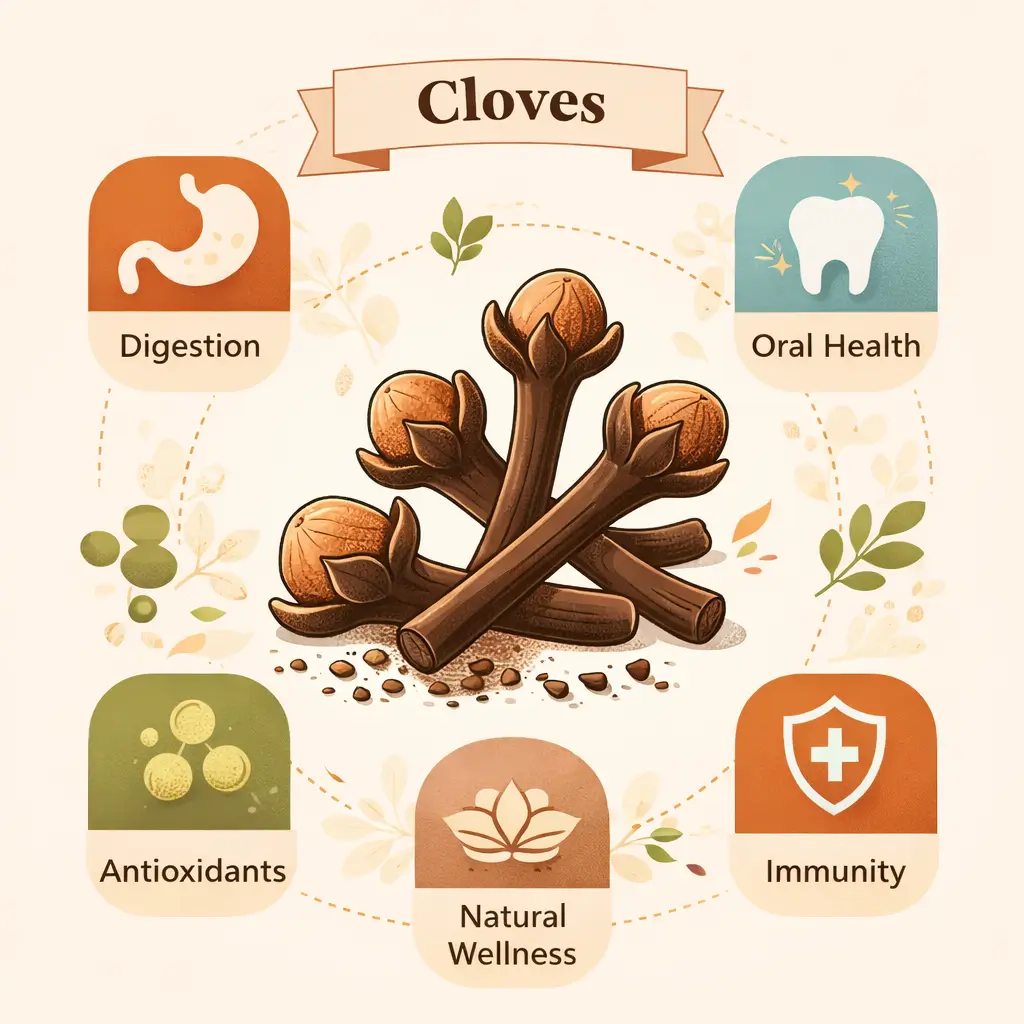
One of the most impressive features of cloves is their antioxidant strength. Antioxidants help neutralize free radicals that can damage cells over time. By reducing oxidative stress, antioxidants play an important role in supporting long term health.
Cloves are also widely recognized for their antibacterial properties. Studies suggest that clove compounds may help fight certain bacteria that contribute to infections and oral health problems. This is one reason clove oil has been traditionally used in dental care.
Another benefit often discussed is digestive support. Cloves may stimulate the production of digestive enzymes which can help improve nutrient absorption and reduce digestive discomfort.
Cloves may also contribute to immune health because their natural compounds help the body defend against certain microbes. While cloves are not a cure for illness, they may support the body’s natural defenses.
Additionally, some research suggests cloves may play a role in supporting healthy blood sugar balance. Certain plant compounds in cloves appear to help improve insulin function, which may help maintain stable glucose levels.
Because cloves are very concentrated, they are usually used in small amounts. When used as part of a balanced diet they can provide powerful plant nutrients that support overall wellness.
Cloves and Digestive Health
Digestive support is one of the most common reasons people search for what are cloves good for. For centuries traditional herbal practices have used cloves to help the stomach function more comfortably and efficiently. The natural compounds found in cloves can help stimulate digestion and support the body during the digestive process.
One reason what are cloves good for often appears in health discussions is their ability to encourage the production of digestive enzymes. These enzymes help break down food so the body can absorb nutrients more effectively. When digestion works smoothly, people may experience less bloating and discomfort after meals.
Cloves also contain compounds that may help reduce gas and support a calm digestive system. Many traditional remedies include clove tea after meals because warm spices can help the stomach relax and process food more easily.
Another answer to what are cloves good for relates to their antimicrobial properties. The digestive system contains many types of bacteria. While many bacteria are helpful, harmful microbes can sometimes cause digestive problems. The natural compounds in cloves may help limit certain harmful bacteria and support a healthier balance in the gut.
Cloves may also support liver function, which plays an important role in digestion and detoxification. The liver helps process nutrients and remove waste products from the body. Some research suggests that the antioxidants in cloves may help protect liver cells from oxidative stress.
Table 2: Digestive Benefits of Cloves
| Digestive Support Area | How Cloves May Help |
|---|---|
| Enzyme production | Encourages enzymes that break down food |
| Bloating relief | Warm spice properties may help calm the stomach |
| Gas reduction | Traditional remedies use cloves to reduce digestive discomfort |
| Gut bacteria balance | Antimicrobial compounds may limit harmful microbes |
| Liver support | Antioxidants may help protect liver cells |
Many people also ask what are cloves good for when looking for natural remedies for occasional nausea. In some traditional practices cloves are combined with ginger or warm tea to support the stomach and ease mild nausea.
Clove tea is one of the simplest ways to support digestion. A few crushed cloves steeped in hot water create a warm drink that may help the digestive system after meals. This simple preparation has been used in many cultures for generations.
Despite these benefits, cloves should still be used in moderation. Because they are very concentrated, small amounts are usually enough to provide digestive support.
Understanding the digestive benefits helps explain why what are cloves good for continues to be a popular question among people interested in natural wellness.
Cloves for Oral Health and Dental Care
One of the most well known answers to what are cloves good for involves oral health. Cloves have been used in dental care for hundreds of years because they contain natural compounds that help support healthy teeth and gums. Many traditional remedies used cloves to soothe tooth discomfort and maintain oral hygiene.
A major reason people ask what are cloves good for when dealing with dental problems is the presence of eugenol. Eugenol is a natural compound found in cloves that has soothing and antimicrobial properties. This compound may help reduce discomfort while also limiting harmful bacteria in the mouth.
Because of these properties, clove oil has been used in natural dental treatments for generations. Dentists have even used eugenol in certain dental preparations because it helps calm sensitive areas. When people search what are cloves good for, dental relief and gum care often appear among the top results.
Cloves may also help reduce the bacteria that contribute to plaque buildup. While brushing and flossing remain the most important steps for oral hygiene, natural spices like cloves may offer additional support when used carefully.
Another reason what are cloves good for is commonly searched is their ability to help freshen breath. The strong aromatic compounds found in cloves can help reduce odor causing bacteria in the mouth. Some people chew a whole clove after meals as a traditional way to freshen breath naturally.
Table 3: Oral Health Benefits of Cloves
| Oral Health Support | How Cloves May Help |
|---|---|
| Tooth discomfort relief | Eugenol may help soothe sensitive teeth |
| Gum health | Antimicrobial compounds may support healthy gums |
| Bacteria control | May help reduce harmful oral bacteria |
| Breath freshness | Natural aroma can help improve breath odor |
| Plaque support | May assist with reducing bacteria that contribute to plaque |
People researching what are cloves good for are often interested in simple home remedies. One common approach is using diluted clove oil on a cotton swab near a sensitive tooth. Another option is drinking warm clove tea which may provide gentle oral support.
However, clove oil is very concentrated and should always be used carefully. Direct application without dilution can irritate the mouth. For safety it is important to use only small amounts and avoid swallowing concentrated clove oil.
Overall, cloves offer natural compounds that may support oral hygiene and comfort. While they should not replace professional dental care, they can complement healthy habits when used appropriately.
Antioxidant Power of Cloves
Another major reason people search what are cloves good for is their exceptional antioxidant content. Cloves are considered one of the most antioxidant rich spices available. Antioxidants are natural compounds that help protect the body from damage caused by free radicals.
Free radicals are unstable molecules that can damage cells and contribute to aging and certain health problems. Antioxidants help neutralize these molecules and support the body’s natural defense systems. This protective role is one of the key answers to what are cloves good for when discussing long term health.
Cloves contain several types of plant compounds that act as antioxidants. The most notable is eugenol, which not only provides the strong aroma of cloves but also contributes to their protective properties. Other compounds such as flavonoids and phenolic acids further enhance the antioxidant potential of cloves.
Because of these compounds, cloves may help reduce oxidative stress in the body. Oxidative stress occurs when there are too many free radicals and not enough antioxidants to balance them. Many people exploring natural nutrition search what are cloves good for when looking for foods that support this balance.
Regularly including antioxidant rich foods in the diet may help support heart health, brain health, and overall wellness. While cloves are not eaten in large quantities, even small amounts can contribute beneficial plant compounds to the diet.
Another reason what are cloves good for appears in health discussions is the potential role of cloves in protecting cells from inflammation related damage. Antioxidants and anti inflammatory compounds often work together to support healthy body systems.
Cloves are commonly added to teas, spice blends, baked goods, and warm drinks. These small additions can provide antioxidant support while also enhancing flavor. In many traditional diets cloves are combined with other spices such as cinnamon and ginger to create powerful spice blends.
Because cloves are highly concentrated, a small pinch is usually enough to add both flavor and nutritional value. This makes them an easy ingredient to include in a balanced diet focused on natural plant foods.
Understanding their antioxidant strength helps explain why what are cloves good for continues to be one of the most searched questions related to spices and natural health.
Cloves and Immune System Support
Immune health is another important reason people search what are cloves good for. Cloves contain natural plant compounds that may help support the body’s defense system. These compounds include antioxidants and antimicrobial substances that help the body respond to harmful microbes.
One explanation for what are cloves good for is their ability to help the body fight certain bacteria and microorganisms. The essential oils found in cloves contain eugenol and other compounds that may limit the growth of harmful microbes. This property has made cloves valuable in traditional remedies used for generations.
Many people exploring natural health solutions ask what are cloves good for when trying to strengthen their immune system. While cloves are not a cure for illness, their antioxidant content helps protect cells from damage caused by oxidative stress. A well protected cell environment supports the immune system’s ability to function effectively.
Cloves may also support immune health through their anti inflammatory properties. Inflammation is part of the body’s natural defense process, but excessive inflammation can place stress on the immune system. Certain compounds in cloves may help maintain a healthy inflammatory response.
Another reason what are cloves good for appears frequently in nutrition discussions is their potential role in protecting against certain microbes that affect respiratory and digestive health. Traditional herbal practices often include cloves in warm teas or herbal mixtures during colder seasons.
Warm clove tea is a simple way many people include cloves in their daily routine. The warmth of the tea combined with the aromatic compounds in cloves can create a comforting drink that supports general wellness.
Cloves are also commonly used in spice blends that include cinnamon, ginger, and nutmeg. These spices together provide a wide range of antioxidants and plant nutrients that contribute to immune support.
Because cloves are very concentrated, only a small amount is usually needed to gain their benefits. Adding a pinch of ground cloves to warm beverages or meals can provide valuable plant compounds without overpowering flavor.
Understanding their antimicrobial and antioxidant properties helps explain why what are cloves good for continues to be a popular question among people interested in natural immune support.
Cloves and Blood Sugar Support
Another important reason people search what are cloves good for relates to blood sugar balance. Maintaining stable blood sugar levels is essential for overall health, and certain plant foods may help support this process. Cloves contain natural compounds that researchers are studying for their potential role in supporting healthy glucose metabolism.
One explanation for what are cloves good for is their possible influence on insulin function. Insulin is the hormone that helps move glucose from the bloodstream into cells where it can be used for energy. Some studies suggest that compounds in cloves may support the way insulin works in the body.
People exploring natural nutrition often ask what are cloves good for when looking for foods that help support metabolic health. The antioxidants found in cloves may help protect cells from oxidative stress that can interfere with normal metabolic processes.
Cloves also contain plant compounds that may influence enzymes involved in carbohydrate metabolism. These enzymes help break down carbohydrates from food and regulate how glucose enters the bloodstream. Supporting these processes may help maintain balanced blood sugar levels.
Another reason what are cloves good for appears in nutrition discussions is their potential role in reducing inflammation related to metabolic health. Chronic inflammation can affect how the body manages blood sugar, and the natural compounds in cloves may contribute to a healthier inflammatory response.
Although cloves may offer supportive properties, they should be viewed as part of a balanced diet rather than a treatment. Healthy blood sugar control depends on many factors including diet, physical activity, sleep, and overall lifestyle.
Including small amounts of cloves in meals or drinks can be an easy way to add beneficial plant compounds to the diet. Ground cloves can be added to oatmeal, smoothies, warm beverages, or spice blends used in cooking.
Because cloves are very concentrated, moderation is important. A small pinch is typically enough to provide both flavor and nutritional value.
Understanding their potential role in metabolic support helps answer the question what are cloves good for for people interested in natural ways to support balanced blood sugar.
Anti Inflammatory Effects and Natural Pain Relief
Another common reason people search what are cloves good for is their natural ability to help relieve discomfort. Cloves contain plant compounds that may support the body during minor aches and irritation. For generations traditional remedies have used cloves to calm sensitive areas and promote comfort.
One explanation for what are cloves good for is the presence of eugenol. Eugenol is a natural compound found in clove oil that is known for its soothing properties. This compound may help calm minor discomfort and support a balanced inflammatory response in the body.
Inflammation is a natural process the body uses to respond to stress or injury. However when inflammation remains elevated it can contribute to discomfort. Many people exploring natural wellness ask what are cloves good for because certain plant compounds in cloves may help support a healthier inflammatory balance.
Cloves have traditionally been used to help ease tooth sensitivity, muscle discomfort, and mild headaches. While these uses come from traditional practices rather than medical treatment, the soothing properties of cloves are widely recognized.
Another reason what are cloves good for often appears in wellness searches is the warming nature of cloves. Warm spices are commonly used in herbal traditions to improve circulation and support relaxation of the body. This warming effect may contribute to the comforting feeling people experience when drinking clove tea or consuming foods containing cloves.
Clove oil has also been used in massage preparations when diluted properly with carrier oils. The aromatic compounds can create a warming sensation that may help relax tight areas of the body.
Despite these traditional uses it is important to remember that cloves are very concentrated. Clove oil especially should be used with caution and proper dilution to avoid irritation.
Adding cloves to warm beverages, teas, and meals can provide gentle exposure to their natural plant compounds without using concentrated forms.
Understanding their soothing and anti inflammatory properties helps explain why what are cloves good for continues to be one of the most frequently searched questions related to natural spices.
Common Uses of Cloves in Daily Life

Many people researching natural spices often ask what are cloves good for because cloves are used in many different ways in everyday life. From cooking and warm drinks to traditional home remedies, cloves remain one of the most versatile spices used around the world.
One of the most popular answers to what are cloves good for is their role in cooking. Cloves add a warm and slightly sweet flavor to both sweet and savory dishes. In the United States cloves are commonly used in baked goods, pumpkin recipes, spice blends, and holiday drinks. Ground cloves are often added to cakes, cookies, oatmeal, and warm desserts.
Another reason people ask what are cloves good for is their use in herbal drinks. Clove tea is a simple preparation made by steeping whole cloves in hot water. Many people drink this tea after meals because what are cloves good for often includes digestive comfort and general wellness support.
Cloves are also used to create aromatic spice blends. Many traditional spice mixtures combine cloves with cinnamon, nutmeg, and ginger. These blends are used in cooking and beverages because what are cloves good for includes both flavor enhancement and the addition of beneficial plant compounds.
Clove oil is another common form people explore when searching what are cloves good for. This concentrated oil is extracted from clove buds and contains the powerful compound eugenol. Because what are cloves good for often relates to oral care, diluted clove oil is sometimes used in traditional dental remedies to help soothe sensitive teeth.
Another everyday use appears in home remedies and natural wellness practices. Many people include cloves in warm drinks, herbal mixtures, or spice infusions because what are cloves good for frequently includes immune support, digestive comfort, and antioxidant intake.
Some households also use cloves for their strong aroma. Whole cloves can be added to simmering water with citrus or cinnamon to create a natural fragrance for the home. In this case people again ask what are cloves good for because cloves offer both aromatic and wellness related properties.
Cloves are also used in certain traditional remedies for seasonal comfort. Warm drinks containing cloves and other spices are often consumed during colder months. These preparations are popular because what are cloves good for often relates to supporting the body during seasonal changes.
Because cloves have such a strong flavor and concentrated compounds, only small amounts are needed. A pinch of ground cloves or a few whole cloves is usually enough to add both flavor and beneficial plant compounds.
The wide variety of uses explains why what are cloves good for remains a popular question among people interested in cooking, natural health, and traditional remedies.
Different Forms of Cloves and How They Are Used
When people search what are cloves good for they often discover that cloves come in several different forms. Each form can be used in a slightly different way depending on the purpose. Understanding these forms helps explain even more clearly what are cloves good for in daily life.
The most common form is whole cloves. Whole cloves are the dried flower buds of the clove tree. Many cooks prefer whole cloves because they keep their flavor longer. When discussing what are cloves good for, whole cloves are often used in soups, rice dishes, teas, and slow cooked meals where their aroma can slowly release.
Another common form people find when researching what are cloves good for is ground cloves. Ground cloves are simply whole cloves that have been finely crushed into powder. This form is popular for baking because it mixes easily into batters and spice blends. Pumpkin desserts, spice cakes, and warm drinks often include ground cloves.
Clove oil is another important form to understand when exploring what are cloves good for. This oil is extracted from the clove buds and contains concentrated eugenol. Because what are cloves good for often relates to oral care and soothing properties, clove oil has been used traditionally in dental preparations and natural remedies. However it is very strong and must be used carefully.
Clove tea is also becoming more popular among people searching what are cloves good for. This tea is made by steeping whole cloves in hot water. Some people add cinnamon or ginger to the tea to enhance both flavor and wellness benefits.
Another option people discover while researching what are cloves good for is clove powder used in herbal mixtures. Herbal practitioners sometimes combine cloves with other spices to create warming herbal blends used in teas and tonics.
Each form of cloves offers the same core plant compounds but in different strengths. Whole cloves provide slow release flavor, ground cloves mix easily into foods, and clove oil delivers the most concentrated form.
Because cloves are very potent, moderation is important regardless of the form used. A small amount is usually enough to enjoy both the flavor and the beneficial plant compounds.
Understanding these forms helps answer the question what are cloves good for because it shows how this single spice can be used in cooking, drinks, and natural wellness practices.
How to Use Cloves Safely and Possible Side Effects
When learning what are cloves good for, it is also important to understand how to use them safely. Cloves are powerful because they contain concentrated natural compounds, so moderation is essential when adding them to food or natural remedies.
One reason people researching what are cloves good for should also consider safety is the strength of the compound eugenol. While this compound provides many benefits, very large amounts of cloves or clove oil may cause irritation or discomfort.
For most people, using cloves in normal cooking amounts is considered safe. Adding a small pinch of ground cloves to recipes or using a few whole cloves in tea or cooking is generally well tolerated.
Clove tea is one of the simplest ways to enjoy the benefits of cloves. A few cloves steeped in hot water can create a warm and aromatic drink. This gentle preparation is often chosen by people exploring what are cloves good for because it provides flavor and beneficial plant compounds in a mild form.
Clove oil requires more caution because it is highly concentrated. Direct application of undiluted clove oil may irritate the skin or mouth. If clove oil is used in traditional remedies it should always be diluted with a carrier oil and used in very small amounts.
Some people may also be sensitive to strong spices. In these cases starting with a small amount can help determine how the body responds. Anyone with specific medical conditions should consult a healthcare professional before using concentrated herbal products.
Children should avoid ingesting clove oil because of its strength. Whole cloves or small amounts of ground cloves in food are generally safer options when used appropriately.
Another safety point often discussed when researching what are cloves good for is daily intake. Cloves can be part of a healthy diet, but excessive consumption is unnecessary and may increase the risk of side effects.
Using cloves in moderation through cooking, teas, and spice blends is usually the safest and most practical approach. This allows people to benefit from their flavor and plant compounds without overconsumption.
Understanding proper use and safety considerations helps ensure that people exploring what are cloves good for can enjoy the benefits of this powerful spice responsibly.
Why Cloves Continue to Be a Valuable Natural Spice
Many people continue searching what are cloves good for because cloves offer a rare combination of strong flavor and impressive health supporting properties. For centuries this small spice has been valued in traditional medicine, cooking, and natural wellness practices across many cultures.
One important reason what are cloves good for remains a common question is the wide variety of benefits cloves may provide. Their natural compounds support digestion, oral health, immune function, and antioxidant protection. These qualities make cloves one of the most interesting spices in natural nutrition.
Cloves are especially valued for their rich antioxidant content. Antioxidants help protect cells from oxidative stress and support long term wellness. Because of this, many people researching what are cloves good for are interested in how cloves can contribute to a balanced and nutrient rich diet.
Another answer to what are cloves good for involves their traditional use in supporting digestive comfort. Many cultures have used cloves in teas and meals to help the stomach process food more comfortably. Warm spices like cloves are often included in herbal drinks after meals.
Cloves are also well known for their role in oral care. The natural compound eugenol found in cloves has been traditionally used to help soothe tooth sensitivity and support healthy gums. This is one of the most widely recognized reasons people ask what are cloves good for when exploring natural remedies.
In addition to their wellness benefits, cloves are also valued for their culinary uses. Their warm aroma and slightly sweet flavor make them a popular ingredient in baked goods, spice blends, and seasonal drinks. A small amount can transform the flavor of many dishes.
Cloves are also available in several forms including whole cloves, ground cloves, clove tea, and clove oil. This variety allows people to use cloves in different ways depending on their needs.
Because cloves are very concentrated, moderation is important. Small amounts are usually enough to enjoy both their flavor and beneficial plant compounds.
Understanding the many uses of cloves helps explain why what are cloves good for continues to attract attention from people interested in natural health and flavorful cooking.
Conclusion
Cloves are one of the most powerful and versatile spices used in kitchens and traditional wellness practices around the world. People often search what are cloves good for because this small spice contains a remarkable concentration of beneficial plant compounds. Cloves are especially valued for their antioxidant properties, digestive support, and ability to contribute to oral health.
The natural compound eugenol gives cloves many of their well known properties. This compound supports antimicrobial activity and may help soothe minor discomfort. Because of these qualities cloves have been used in herbal traditions for centuries.
Cloves may support several areas of health including digestion, immune function, antioxidant protection, and balanced blood sugar levels. They are also commonly used in cooking where their warm flavor enhances baked goods, teas, and savory meals.
Another reason cloves remain popular is their versatility. They can be used as whole buds, ground spice, tea infusions, or carefully diluted oil. Each form provides access to the beneficial compounds found in cloves.
Although cloves provide many benefits, they should be used in moderation due to their concentrated nature. Adding small amounts to a balanced diet is usually enough to enjoy their advantages.
Overall cloves are a valuable spice that combines flavor, tradition, and natural wellness support.
FAQ
- What are cloves good for in everyday health?
Cloves are good for supporting several areas of health. They contain antioxidants that help protect cells from oxidative stress and natural compounds that may support digestion and oral health. Cloves are also used in traditional remedies to help soothe minor discomfort. When used in cooking or teas they provide beneficial plant compounds that can contribute to overall wellness.
- Are cloves good for teeth and gums?
Cloves have long been associated with oral health because they contain the compound eugenol. Eugenol has natural antimicrobial and soothing properties that may help support healthy gums and reduce bacteria in the mouth. Clove oil has traditionally been used for temporary tooth discomfort, although it should always be diluted and used carefully.
- Can cloves help with digestion?
Yes cloves may support digestion by stimulating digestive enzymes that help break down food. This process may help reduce bloating and support nutrient absorption. Many traditional remedies include clove tea after meals because warm spices like cloves may help calm the stomach and support comfortable digestion.
- Is it safe to eat cloves every day?
Eating small amounts of cloves in food is generally safe for most people. Cloves are very concentrated so moderation is important. Using a small pinch in cooking or a few cloves in tea is usually sufficient. Excessive consumption or use of concentrated clove oil may cause irritation and should be avoided.
- Do cloves help support the immune system?
Cloves contain antioxidants and antimicrobial compounds that may support the immune system. These compounds help protect cells and may help the body respond to certain harmful microbes. While cloves are not a cure for illness they can be part of a balanced diet that supports overall immune health.
Follow Us Facebook

what are cloves good for
Ingredients
Equipment
Method
- Add water to a small saucepan and bring to a gentle boil.
- Add the whole cloves and optional cinnamon stick or ginger.
- Reduce heat and allow the spices to simmer for about 5 minutes.
- Remove from heat and let the mixture steep for another 3 minutes.
- Strain the tea into cups.
- Add honey if desired and serve warm.