
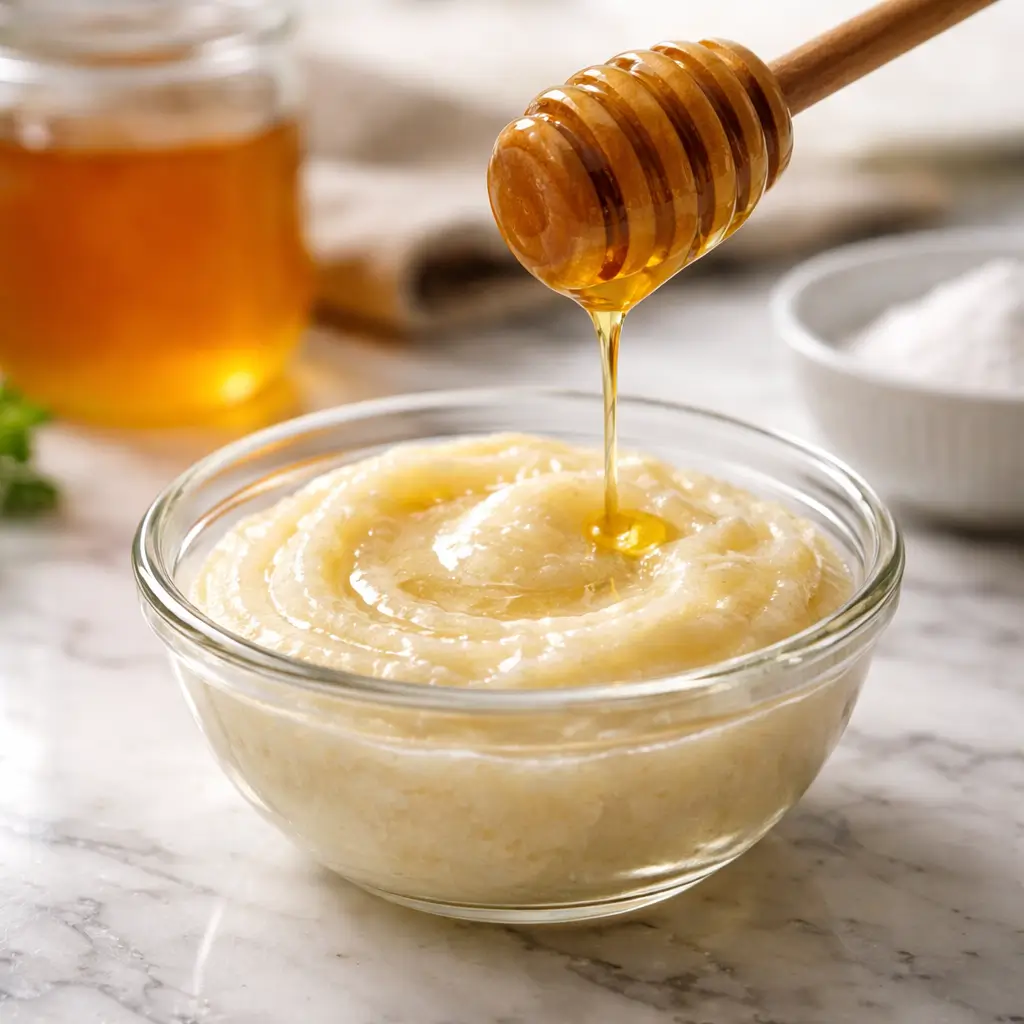
At first glance, baking soda and honey trick sounds like a simple kitchen hack. Yet it has gained attention across blogs, social media, and home remedy forums in the United States for its supposed multi purpose benefits.
In many online discussions, the baking soda and honey trick is described as a natural mixture used for skincare, minor health remedies, and even household cleaning. Supporters claim it can help with acne, soothe sore throats, whiten teeth, and detox the body. Others use it as a DIY face mask or exfoliating scrub.
The idea behind this combination is straightforward. Baking soda (sodium bicarbonate) is mildly alkaline and slightly abrasive. Honey, especially raw or unprocessed varieties, contains natural sugars and trace compounds that have mild antimicrobial properties. When mixed together, they create a thick paste that can be applied topically or, in some cases, consumed in small amounts.
This article explores where this trend originated, what people use it for, how it’s prepared, what science actually says, and whether it’s safe. The goal is to separate practical uses from exaggerated claims while focusing on clear, evidence based information for US readers.
Where Did the Baking Soda and Honey Trick Come From?
The exact origin of the baking soda and honey trick is difficult to trace. It did not emerge from a single medical study or formal wellness program. Instead, it appears to have evolved from traditional home remedies and natural health practices passed down through generations.
Baking soda has long been used in American households for cooking, deodorizing, and cleaning. It has also appeared in folk remedies for heartburn, oral care, and skin exfoliation. Honey, particularly raw honey, has been valued for centuries in many cultures for its soothing and preservative qualities. Historically, honey was used on minor wounds and for calming coughs.
In the United States, interest in this combination grew alongside the natural wellness movement. Online blogs, YouTube videos, and social media posts began promoting the mixture as a “natural alternative” to commercial skincare products or over the counter remedies.
However, it’s important to note that popularity does not equal scientific validation. Much of the information circulating online is anecdotal rather than based on controlled clinical research.
Understanding this background helps explain why the baking soda and honey trick continues to trend: it blends familiar pantry ingredients with the appeal of simple, low cost solutions.How to Make Cuajito Puertorriqueño
Common Uses of the Baking Soda and Honey Trick
The baking soda and honey trick is commonly used in three main areas: skincare, minor home remedies, and household cleaning. While these uses vary in credibility, they follow similar preparation methods.
1. Skincare Applications
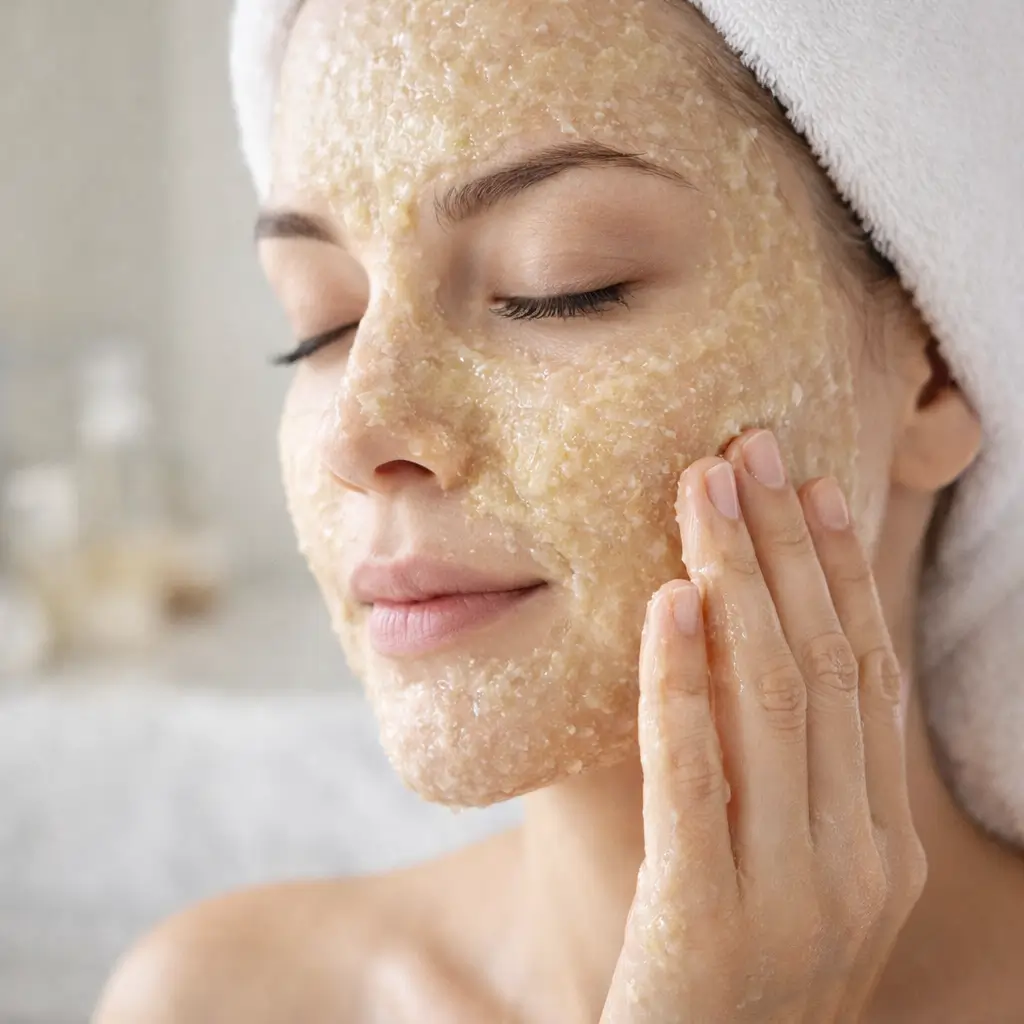
Many people mix baking soda and honey into a paste and apply it as a face mask or exfoliating scrub. The reasoning is:
- Baking soda provides gentle physical exfoliation.
- Honey offers moisture and mild antibacterial properties.
Supporters claim it may help reduce acne, unclog pores, and brighten skin tone. However, dermatologists often caution that baking soda’s alkaline nature can disrupt the skin’s natural pH barrier.
2. Minor Home Remedies
Some individuals consume small amounts of the mixture diluted in warm water. Common claims include:
- Relief from sore throat
- Digestive support
- Immune “boosting”
While honey is widely recognized for soothing coughs, baking soda ingestion should be approached carefully, as excessive intake can affect electrolyte balance.
3. Natural Cleaning Solution
Others use the mixture as a gentle scrub for surfaces such as sinks or stovetops. In this case:
- Baking soda acts as a mild abrasive.
- Honey is less essential but sometimes included for texture.
Among these uses, cleaning applications are generally the least controversial, while internal consumption requires the most caution.
How to Prepare the Baking Soda and Honey Trick (Step by Step)
Although variations exist, most versions of the baking soda and honey trick follow a simple ratio and preparation method. The exact amount depends on how it will be used.
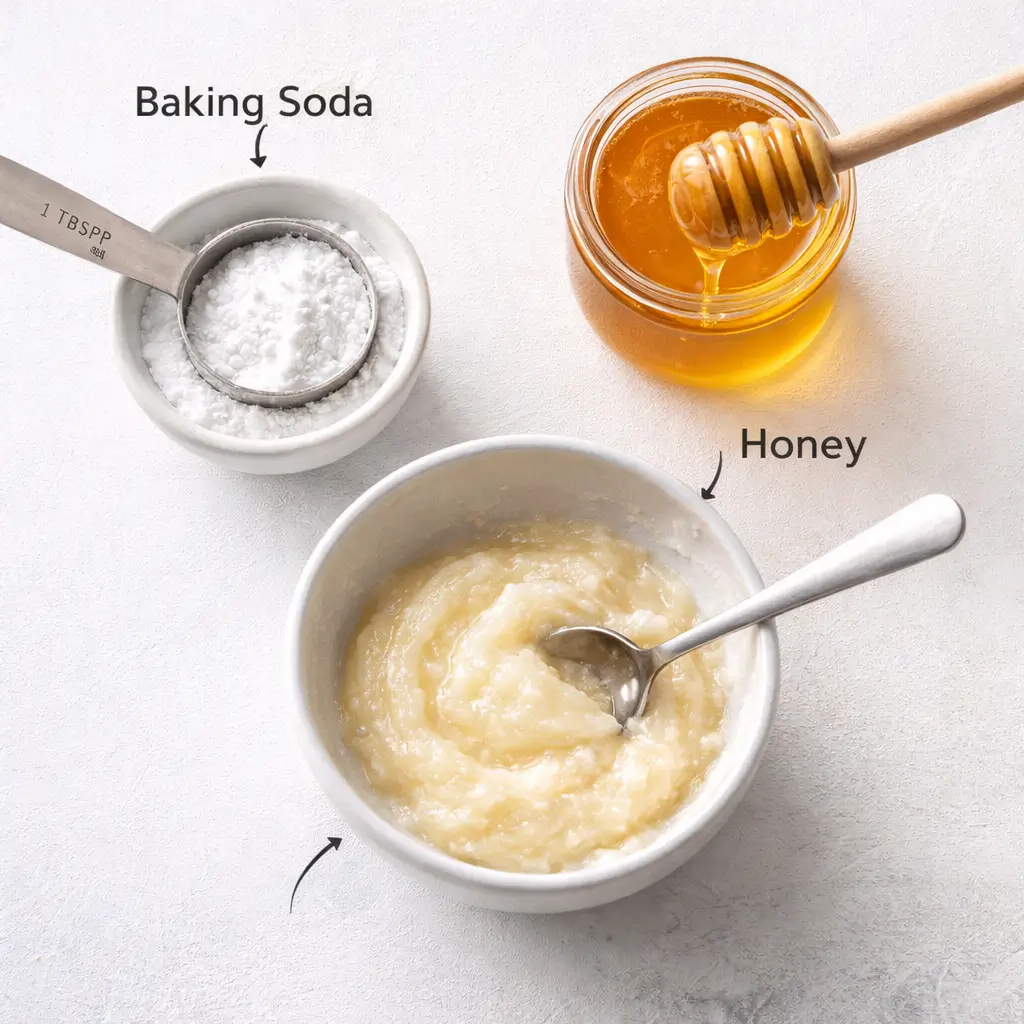
Basic Preparation Formula
- 1 tablespoon baking soda
- 1 tablespoon raw or regular honey
- Optional: a few drops of water for thinning
Mix the ingredients in a small bowl until a thick, smooth paste forms. Adjust texture by adding small amounts of water if needed.
Step by Step for Skincare Use
- Wash your face with a gentle cleanser.
- Pat skin dry.
- Apply a thin layer of the paste using clean fingers.
- Leave on for 5 to 10 minutes.
- Rinse thoroughly with lukewarm water.
- Follow with moisturizer.
Avoid scrubbing aggressively, as baking soda is mildly abrasive.
Step by Step for Sore Throat Remedy
- Mix ½ teaspoon baking soda with 1 teaspoon honey.
- Stir into warm (not hot) water.
- Sip slowly.
This should not be used frequently or in large amounts. People with medical conditions, including high blood pressure or kidney issues, should consult a healthcare provider before ingesting baking soda.
Step by Step for Cleaning
- Mix equal parts into a thick paste.
- Apply to stained surfaces.
- Gently scrub with a sponge.
- Rinse clean.
Potential Benefits and What Science Says
Many online claims about the baking soda and honey trick suggest broad health and skincare benefits. To understand what may be realistic, it helps to look at each ingredient individually.
Ingredient Breakdown
| Ingredient | Common Claim | What Research Suggests |
|---|---|---|
| Baking Soda | Balances pH, detoxifies body | Neutralizes acid locally; no evidence it “detoxifies” the body |
| Honey | Fights bacteria, heals skin | Some antimicrobial and wound healing properties, especially raw honey |
| Combined | Boosts immunity, clears acne | Limited clinical evidence supporting combined effect |
Skincare Benefits
Honey has documented mild antibacterial properties and may support wound healing in certain settings. Medical grade honey has been studied in clinical environments. However, household honey is not standardized for medical use.
Baking soda, on the other hand, has a high pH (around 9), which can disrupt the skin’s natural barrier. Frequent use may lead to dryness or irritation, especially for sensitive skin types.
Digestive or Internal Use
Baking soda can temporarily neutralize stomach acid, which explains why it appears in some antacid products. However, regular ingestion is not recommended without medical supervision due to potential electrolyte imbalances.
Honey may soothe coughs and mild throat irritation. Its benefits are better supported than broad immunity claims.
Overall, while certain individual properties are supported, the combination itself lacks strong clinical evidence for most viral claims.
Safety, Risks, and Important Precautions
The baking soda and honey trick may look harmless because it uses pantry ingredients, but natural does not always mean risk free. Understanding possible side effects is essential before trying it regularly.
Skin Irritation and pH Disruption
One of the biggest concerns with the baking soda and honey trick is skin irritation. Baking soda has an alkaline pH of about 9, while healthy skin typically sits around 4.5 to 5.5. Repeated use can weaken the skin barrier, causing dryness, redness, or breakouts especially for people with sensitive or acne prone skin.
Honey is generally gentler, but allergic reactions are possible, particularly for those with pollen allergies.
Risks of Internal Use
When people drink the baking soda and honey trick in water, the main concern is baking soda intake. Excessive consumption can:
- Disrupt sodium levels
- Increase blood pressure
- Cause stomach discomfort
- Affect kidney function in vulnerable individuals
It should not be used frequently or in large amounts without medical advice.
Not a Substitute for Medical Treatment
Online claims sometimes present the baking soda and honey trick as a cure all. There is no scientific evidence supporting its use for serious conditions. It should never replace prescribed treatment.
Used occasionally and cautiously, it may serve limited practical purposes but understanding boundaries is key.
When the Baking Soda and Honey Trick May (and May Not) Make Sense
The baking soda and honey trick is often described online as a multipurpose solution, but context matters. Whether the baking soda and honey trick is appropriate depends on how and why it is being used.
Situations Where It May Be Reasonable
For short term, occasional use, the baking soda and honey trick may make sense in limited scenarios:
- Gentle surface cleaning: Baking soda works as a mild abrasive, and the baking soda and honey trick can help lift light stains when used carefully.
- Temporary sore throat relief: Honey alone is widely used to soothe irritation. In diluted form, the baking soda and honey trick may provide short term comfort, though honey is likely doing most of the soothing.
- Occasional exfoliation: Used very sparingly, the baking soda and honey trick may remove dead skin cells. A patch test is strongly recommended.
In these cases, moderation is critical. The baking soda and honey trick should not become a daily routine.
When It Should Be Avoided
There are situations where the baking soda and honey trick is not advisable:
- Sensitive or compromised skin
- Chronic digestive issues
- High blood pressure or kidney concerns
- Open wounds without medical guidance
The baking soda and honey trick is not a medically approved treatment for serious health conditions. If symptoms persist, worsen, or involve underlying medical issues, professional evaluation is essential.
Understanding limits helps prevent misuse and keeps expectations realistic.
Comparing the Baking Soda and Honey Trick to Evidence Based Alternatives
The baking soda and honey trick is often promoted as a natural alternative to commercial products. However, comparing the baking soda and honey trick to evidence based options helps clarify where it may fall short.
For Skincare
Many people use the baking soda and honey trick as an acne remedy or exfoliating mask. Dermatology guidelines in the United States generally recommend products formulated with controlled concentrations of ingredients like salicylic acid or benzoyl peroxide for acne. These products are tested for safety and pH balance.
By contrast, the baking soda and honey trick is not pH balanced for skin. While honey may provide mild soothing effects, baking soda can disrupt the skin barrier when used frequently.
For Sore Throat Relief
The baking soda and honey trick is sometimes consumed in warm water. Research supports honey alone for mild cough relief, particularly in children over one year old. Baking soda does not have strong evidence supporting immune benefits.
In this case, honey by itself may be sufficient without adding baking soda.
For Cleaning
When used as a scrub, the baking soda and honey trick is generally less practical than baking soda alone. Honey adds stickiness but does not significantly enhance cleaning performance.
Overall, the baking soda and honey trick may offer limited usefulness, but purpose formulated products are often more reliable and safer for regular use.
Common Myths About the Baking Soda and Honey Trick
As the baking soda and honey trick continues to circulate online, several exaggerated claims have followed it. Separating myth from fact is essential for making informed decisions.
Myth 1: It “Detoxifies” the Body
One of the most repeated claims is that the baking soda and honey trick detoxifies the body. In reality, the human body already has built in detoxification systems primarily the liver and kidneys. There is no scientific evidence that the baking soda and honey trick enhances this process.
Myth 2: It Cures Serious Diseases
Some online posts suggest the baking soda and honey trick can treat or cure serious illnesses. These claims are not supported by credible medical research. While honey has mild antimicrobial properties and baking soda can neutralize acid, neither ingredient has been proven to cure chronic or life threatening conditions.
Myth 3: Natural Means Completely Safe
Because the baking soda and honey trick uses natural ingredients, some assume it is automatically safe for everyone. However, baking soda can irritate skin and disrupt sodium balance when consumed excessively. Honey may also trigger allergic reactions in sensitive individuals.
Myth 4: More Is Better
Increasing the amount or frequency of the baking soda and honey trick does not increase its effectiveness. Overuse may actually increase the risk of side effects.
Understanding these misconceptions helps prevent misuse and unrealistic expectations.
Practical Guidelines for Safe Use
If someone chooses to try the baking soda and honey trick, following careful guidelines can reduce potential risks. The baking soda and honey trick should always be used conservatively and with realistic expectations.
Start With a Patch Test
Before applying the baking soda and honey trick to the face or skin, perform a patch test. Apply a small amount to the inside of the wrist and wait 24 hours. If irritation, redness, or itching develops, avoid further use.
Use It Infrequently
The baking soda and honey trick is not designed for daily application. Because baking soda is alkaline, repeated use may weaken the skin barrier. Limiting use to occasional applications helps reduce dryness and irritation.
Avoid High Risk Groups for Internal Use
Drinking the baking soda and honey trick should be approached cautiously. People with high blood pressure, heart conditions, kidney disease, or those on sodium restricted diets should avoid ingesting baking soda unless advised by a healthcare professional.
Keep Expectations Realistic
The baking soda and honey trick may provide mild, short term effects in certain cases. It is not a replacement for medically approved treatments, prescription skincare, or evidence based therapies.
Used thoughtfully, the baking soda and honey trick may have limited situational use but safety should always come first.
Why the Baking Soda and Honey Trick Became So Popular
The baking soda and honey trick did not gain popularity through medical journals or professional health organizations. Instead, the baking soda and honey trick spread rapidly through social media platforms, blogs, and short form video content in the United States.
The Appeal of Simple Ingredients
Part of the appeal behind the baking soda and honey trick is accessibility. Most households already have both ingredients in the kitchen. The idea that a low cost mixture could replace expensive skincare or wellness products makes the baking soda and honey trick especially attractive.
The Power of Before and After Content
Visual transformation posts have played a large role in promoting the baking soda and honey trick. However, online images and testimonials do not equal scientific evidence. Lighting, filters, and selective storytelling can exaggerate results.
The “Natural Is Better” Narrative
Many people prefer home remedies over synthetic products. The baking soda and honey trick fits neatly into this preference. Still, natural ingredients can cause irritation or side effects when misused.
Algorithm Driven Trends
Viral health hacks often resurface in cycles. Once engagement increases, algorithms amplify the baking soda and honey trick further, reinforcing its visibility.
Understanding how trends spread helps readers evaluate claims critically rather than relying on popularity alone.
What Medical Professionals Typically Say
Healthcare professionals generally approach viral home remedies with caution. While baking soda and honey are both familiar household ingredients, medical experts tend to evaluate each substance separately rather than endorsing popular online combinations.
Dermatology Perspective
Dermatologists often warn against applying highly alkaline substances directly to the skin. Healthy skin maintains a slightly acidic pH, which supports its protective barrier. Repeated exposure to alkaline materials can weaken this barrier, potentially leading to dryness, irritation, or breakouts.
Honey, particularly medical grade varieties, has documented wound care uses in clinical settings. However, standard grocery store honey is not regulated or standardized for therapeutic treatment.
Gastroenterology and Internal Use
From a digestive standpoint, baking soda can temporarily neutralize stomach acid. That is why it appears in some antacid products. However, dosage matters significantly. Excessive intake may alter sodium balance and affect blood pressure. Medical supervision is important if used beyond occasional, limited amounts.
Cleaning and Household Use
Professionals generally consider baking soda safe for light cleaning tasks. In this context, honey is not necessary and may add stickiness rather than performance benefits.
Overall, experts emphasize moderation, evidence based treatments, and individualized medical advice rather than relying on viral trends.
Next, we’ll summarize key takeaways before moving into the conclusion.
Key Takeaways and Final Thoughts Before Conclusion
After reviewing its origins, uses, risks, and scientific context, several clear themes emerge about this popular home mixture.
First, both ingredients have legitimate, limited uses on their own. Baking soda works as a mild abrasive and acid neutralizer. Honey has mild soothing and antimicrobial properties, particularly in medical grade forms. However, combining them does not automatically create a scientifically proven remedy.
Second, many claims circulating online are exaggerated. There is no strong clinical evidence supporting detoxification, immune “boosting,” or treatment of serious diseases. Most reported benefits are anecdotal rather than supported by controlled studies.
Third, safety depends on how the mixture is used. Occasional topical application may be tolerated by some individuals, but frequent use can disrupt the skin barrier. Internal consumption should be limited and avoided by individuals with certain health conditions.
Finally, popularity does not equal effectiveness. Viral trends often spread faster than scientific validation.
Conclusion
Simple home remedies continue to capture attention in the United States, especially when they rely on familiar kitchen ingredients. The mixture of baking soda and honey is one such trend that has gained traction across blogs and social media. While each ingredient has limited, practical uses on its own, the combined claims often extend beyond what scientific evidence currently supports.
Honey may help soothe minor throat irritation and has documented antimicrobial properties in certain medical contexts. Baking soda can function as a mild abrasive and temporary acid neutralizer. However, frequent topical use may disrupt the skin’s natural barrier, and excessive internal use can pose health risks related to sodium balance.
Most online testimonials are anecdotal rather than research based. For routine skincare, digestive concerns, or chronic conditions, evidence based treatments remain the safest choice. Occasional, cautious use may be reasonable for minor purposes, but it should never replace professional medical advice. Understanding the limits of viral remedies allows consumers to make safer, informed decisions.
FAQ
- Is it safe to use baking soda and honey on your face?
Using this mixture on the face may be safe for some people when applied occasionally and followed by proper moisturizing. However, baking soda is alkaline and can disrupt the skin’s natural pH, potentially causing dryness or irritation. Individuals with sensitive, dry, or acne prone skin may experience worsening symptoms. A patch test on a small area of skin for 24 hours is recommended before full application. If redness, itching, or burning occurs, discontinue use. For ongoing skin concerns, dermatologist recommended products are generally more reliable and formulated to maintain healthy skin balance.
- Can drinking baking soda and honey improve digestion?
Baking soda can temporarily neutralize stomach acid, which may provide short term relief from mild heartburn. Honey may soothe throat irritation but does not directly improve digestion. Regular consumption of baking soda is not recommended without medical supervision because it can alter sodium levels and affect blood pressure. People with kidney disease, heart conditions, or those on sodium restricted diets should avoid ingesting baking soda. Occasional use in small amounts may be tolerated by healthy adults, but persistent digestive symptoms should be evaluated by a healthcare professional.
- Does this mixture detox the body?
There is no scientific evidence that combining these ingredients detoxifies the body. The liver and kidneys are responsible for removing waste and toxins naturally. No food or simple home mixture has been proven to enhance this complex biological process in healthy individuals. Claims about detoxification are often marketing language rather than medically supported facts. Maintaining hydration, balanced nutrition, regular physical activity, and proper sleep supports the body’s natural detox systems far more effectively than any single remedy.
- Can it help with acne?
Some people use the mixture as a DIY face mask because honey has mild antibacterial properties and baking soda provides exfoliation. However, baking soda’s alkaline nature can disrupt the protective skin barrier, potentially worsening acne or causing irritation. Dermatologists often recommend products containing controlled concentrations of ingredients like salicylic acid or benzoyl peroxide instead. If acne persists, professional evaluation can help determine the underlying cause and guide appropriate treatment options.
- Is it better than commercial skincare or cleaning products?
In most cases, commercial products are formulated with safety testing, balanced pH levels, and controlled ingredient concentrations. While baking soda alone is effective for certain light cleaning tasks, adding honey does not significantly improve cleaning power. For skincare, professionally developed products are generally safer for regular use. Home mixtures may seem cost effective, but they lack standardized testing and may not deliver consistent results. Choosing products appropriate for your specific need typically provides better reliability and safety.
Follow us Facebook