
When making hawaiian huli huli chicken stack at home, you’re combining traditional Hawaiian barbecue flavors with a modern layered presentation. This dish takes inspiration from classic island style grilled chicken and transforms it into a structured, stacked meal.
In many hawaiian huli huli chicken stack recipes, the base comes from the famous roadside huli huli chicken that became popular in Hawaii in the 1950s. The term “huli” means “turn” in Hawaiian, referring to the method of turning the chicken repeatedly over open flames while it grills. The stack version keeps the same sweet and savory marinade but presents the components in layers.
Instead of serving grilled chicken simply over rice, this variation builds upward. Typically, it includes grilled chicken slices, seasoned rice, grilled pineapple, vegetables, and sometimes a fresh slaw. Each layer adds texture and flavor contrast.
The result is a balanced dish that combines smoky, sweet, tangy, and savory notes in one cohesive presentation. While rooted in Hawaiian barbecue traditions, the stacked format makes it especially appealing for home cooks in the United States who want something visually impressive yet approachable.
The Origin of Traditional Huli Huli Chicken
The foundation of a hawaiian huli huli chicken stack begins with understanding traditional huli huli chicken. This iconic Hawaiian dish dates back to the 1950 s, when Ernest Morgado popularized it during community fundraisers across Hawaii. Large grills were set up outdoors, and rows of chicken were cooked between two metal grates that were flipped or “huli’d” repeatedly over open charcoal pits.
The cooking method was simple but effective. Constant turning ensured even caramelization while preventing burning. The marinade, rich in soy sauce, sugar, ginger, and garlic, created a glossy glaze as it reduced over the heat.
Over time, huli huli chicken became a staple of Hawaiian gatherings, roadside stands, and weekend cookouts. It is traditionally served with white rice and macaroni salad a classic plate lunch combination in Hawaii.
The hawaiian huli huli chicken stack keeps these original flavor principles but elevates the presentation. Instead of a casual plate lunch style, the ingredients are layered intentionally. The stack approach adds visual structure while maintaining the sweet savory island flavor profile that defines the dish.
Understanding this background helps you recreate the dish with respect for its roots while adapting it for modern kitchens and American home cooking styles.Dr Oz Pink Gelatin Trick Recipe: Proven Results?
Core Ingredients for an Authentic Flavor Base
A successful hawaiian huli huli chicken stack begins with a well balanced ingredient list. The marinade is the heart of the dish, while the stacked layers build texture and contrast. Below is a breakdown of the essential components.
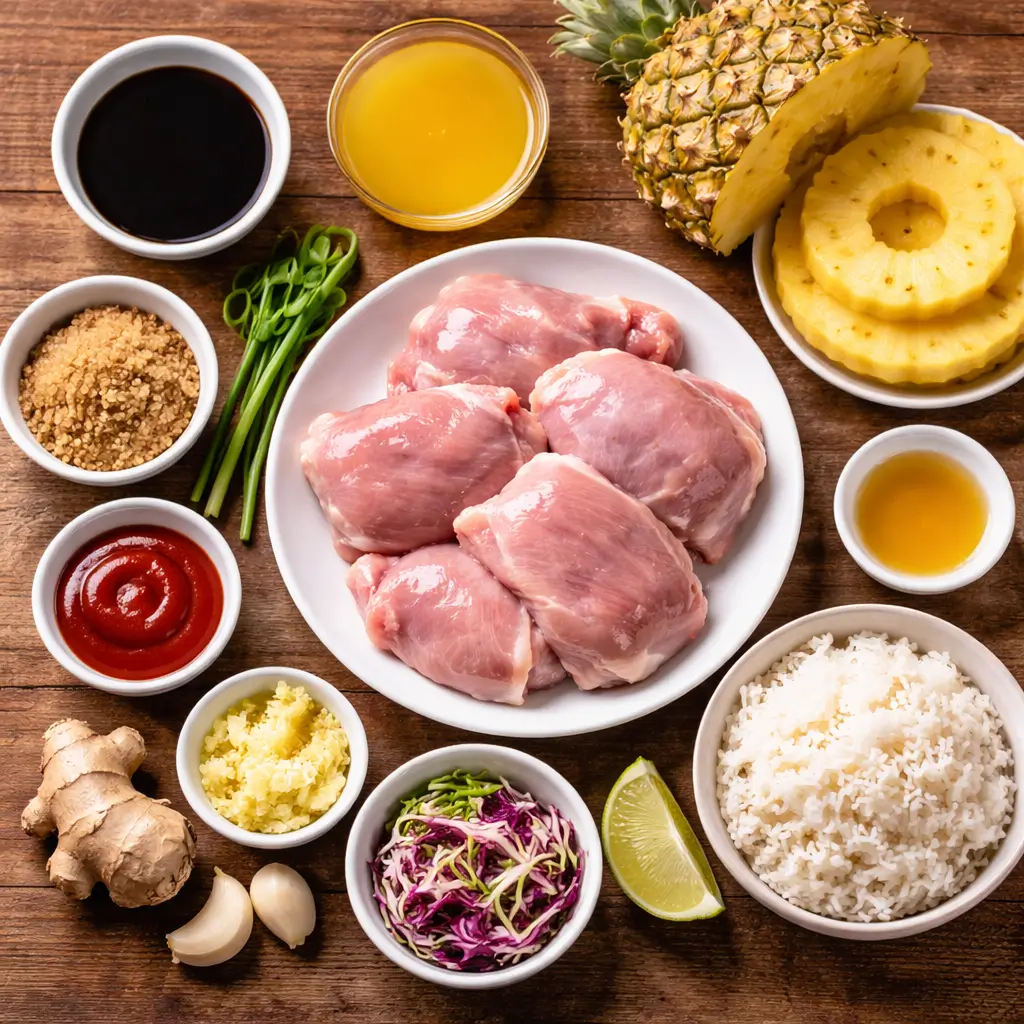
Main Protein
- Boneless skinless chicken thighs (preferred for juiciness)
- Chicken breasts (leaner alternative)
Classic Huli Huli Marinade Ingredients
- Soy sauce
- Brown sugar
- Ketchup
- Fresh ginger
- Garlic
- Pineapple juice
- Rice vinegar or apple cider vinegar
- Sesame oil
These ingredients create the signature sweet savory glaze that caramelizes beautifully during grilling.
Stack Components
- Steamed white rice or coconut rice
- Grilled pineapple slices
- Grilled red onions or bell peppers
- Fresh cabbage slaw (lightly dressed)
- Green onions and sesame seeds for garnish
To help organize the ingredients clearly, here is a structured overview:
| Component | Purpose in the Stack | Flavor Contribution |
|---|---|---|
| Marinated Chicken | Main protein layer | Sweet, savory, smoky |
| Rice | Base foundation | Neutral, absorbs sauce |
| Grilled Pineapple | Mid layer accent | Sweet, caramelized |
| Slaw | Fresh contrast | Crisp, slightly tangy |
| Garnish | Finishing touch | Aromatic, nutty |
Choosing quality ingredients matters. Fresh ginger and garlic significantly improve depth compared to powdered alternatives. Pineapple juice should be 100% juice, not syrup based, to avoid excessive sweetness.
By building around these foundational ingredients, you ensure your hawaiian huli huli chicken stack delivers balanced flavor and structural integrity in every bite.
How to Make the Marinade for hawaiian huli huli chicken stack
The flavor of a hawaiian huli huli chicken stack depends heavily on the marinade. This mixture creates the signature sweet, savory, and slightly tangy glaze that defines the dish. Getting the balance right ensures the chicken caramelizes properly without becoming overly sweet.
Step by Step Marinade Preparation
- In a medium bowl, combine soy sauce and brown sugar. Stir until the sugar begins to dissolve.
- Add ketchup and pineapple juice for sweetness and body.
- Mix in freshly minced garlic and grated ginger.
- Add a small amount of rice vinegar for brightness.
- Finish with a drizzle of sesame oil for subtle depth.
Whisk thoroughly until smooth. The consistency should be slightly thick but still pourable.
Marinating the Chicken
Place the chicken in a sealed container or zip top bag. Pour most of the marinade over the chicken, reserving a small portion for basting later. Refrigerate for at least 4 hours, though overnight marinating produces deeper flavor for your hawaiian huli huli chicken stack.
Avoid marinating longer than 24 hours, as the acidity from pineapple juice can begin to break down the texture excessively.
Flavor Balance Tips
- If the marinade tastes too salty, add a small splash of pineapple juice.
- If it tastes too sweet, add a teaspoon of vinegar.
- Always taste before using it on your hawaiian huli huli chicken stack to ensure balance.
Proper marinade preparation is what gives the final stack its glossy, caramelized exterior and rich island flavor profile.
Grilling Techniques for Maximum Flavor
Cooking the chicken correctly is essential for a well balanced hawaiian huli huli chicken stack. The goal is to achieve a lightly charred exterior with a juicy interior while allowing the marinade to caramelize without burning.
Preparing the Grill
Preheat your grill to medium heat (about 375 to 400°F). Lightly oil the grates to prevent sticking. If using charcoal, allow the coals to reach a steady, even heat before placing the chicken on the grill.
Remove the chicken from the marinade and let excess liquid drip off. Too much marinade can cause flare ups.
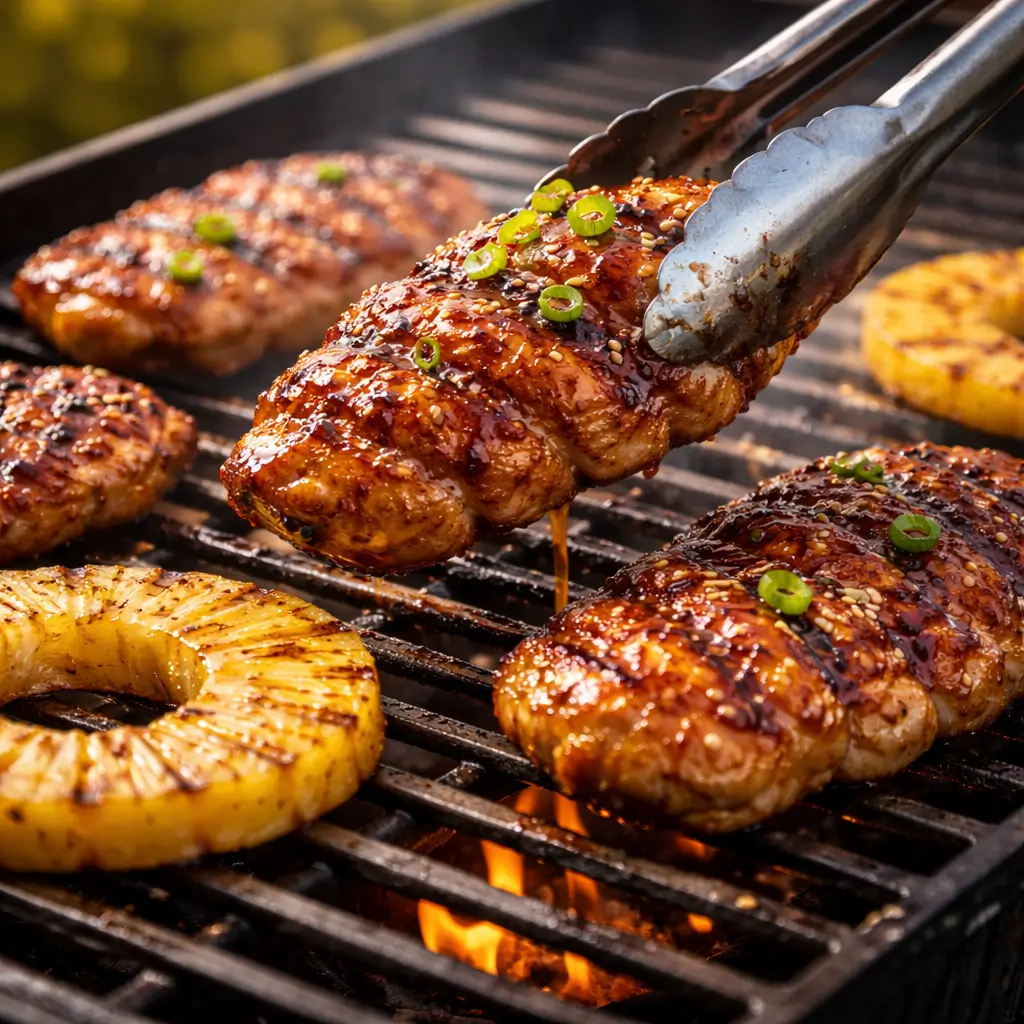
Grilling Method
- Place the chicken on the grill over direct heat.
- Cook for about 5 to 7 minutes per side.
- Turn the chicken (“huli”) regularly to prevent burning and encourage even caramelization.
- During the final minutes, brush with the reserved marinade for added glaze.
The internal temperature should reach 165°F for safe consumption.
Grilling Temperature Guide
| Chicken Cut | Heat Level | Cooking Time | Best Result |
|---|---|---|---|
| Thighs | Medium | 12 to 15 min total | Juicy, flavorful |
| Breasts | Medium | 10 to 14 min total | Lean, firm texture |
| Bone in pieces | Medium low | 25 to 30 min total | Deep smoky flavor |
Allow the chicken to rest for 5 to 10 minutes before slicing. Resting keeps juices locked inside, which is important when layering a hawaiian huli huli chicken stack.
If grilling outdoors isn’t possible, a grill pan on the stovetop can create similar caramelization. The key is moderate heat and controlled turning to avoid burning the sugars in the marinade.
Proper grilling ensures your hawaiian huli huli chicken stack delivers the smoky depth that makes the dish stand out.
Section 6: How to Assemble a hawaiian huli huli chicken stack
Once the chicken is grilled and rested, assembling the hawaiian huli huli chicken stack becomes the final step in creating a balanced and visually structured dish. The goal is to build layers that hold together while delivering complementary textures in each bite.
Step 1: Choose the Base
Start with a firm base layer. Steamed white rice is traditional, but coconut rice can add subtle sweetness. Press the rice gently into a round mold or small bowl to help it hold its shape when plated.
Step 2: Add the Chicken Layer
Slice the grilled chicken into even strips. Arrange the slices neatly over the rice base. Keep the pieces slightly overlapping to create stability and even distribution of flavor.
Step 3: Layer Sweet and Savory Elements
Add grilled pineapple slices directly over the chicken. The caramelized fruit enhances the sweet notes of the marinade. Follow with lightly grilled red onions or bell peppers for additional depth.
Step 4: Add Fresh Contrast
Top the stack with a small portion of crisp cabbage slaw. The fresh crunch balances the smoky richness of the chicken in the hawaiian huli huli chicken stack.
Step 5: Garnish
Finish with sliced green onions and a sprinkle of sesame seeds. A light drizzle of reserved glaze can be added for shine and extra flavor.
For a cleaner presentation, use a ring mold and gently lift it after layering. If serving casually, stacking free form works well too.
Proper layering ensures structural stability, visual appeal, and balanced flavor in every forkful.
Flavor Variations for hawaiian huli huli chicken stack
One of the strengths of a hawaiian huli huli chicken stack is its flexibility. While the classic preparation highlights sweet pineapple, soy based marinade, and grilled chicken, small adjustments can create new flavor dimensions without losing the dish’s identity.
Spicy Island Version
For a spicy variation of hawaiian huli huli chicken stack, add red pepper flakes or a spoonful of sriracha to the marinade. You can also mix a little chili garlic sauce into the glaze for subtle heat. A spicy slaw made with jalapeños and lime juice adds contrast without overpowering the sweetness.
Tropical Fusion Version
To enhance tropical flavors in hawaiian huli huli chicken stack, incorporate mango slices or grilled papaya between layers. Coconut rice works especially well in this version, reinforcing the island inspired profile.
Low Carb Option
If you want a lighter hawaiian huli huli chicken stack, replace the rice with cauliflower rice or grilled zucchini rounds. The stack structure remains intact while reducing carbohydrates.
Extra Smoky Variation
For deeper smokiness in hawaiian huli huli chicken stack, use charcoal grilling or add a small amount of smoked paprika to the marinade. Wood chips such as hickory or mesquite can also intensify flavor when grilling outdoors.
Sauce Enhancement Table
| Variation | Key Addition | Flavor Impact |
|---|---|---|
| Spicy | Chili flakes, sriracha | Heat and depth |
| Tropical | Mango, coconut rice | Sweet and fruity |
| Low Carb | Cauliflower rice | Lighter texture |
| Extra Smoky | Smoked paprika | Bold smoky notes |
These variations allow you to personalize hawaiian huli huli chicken stack while keeping the foundational marinade and grilling technique consistent.
Best Side Dishes to Serve with hawaiian huli huli chicken stack
While a hawaiian huli huli chicken stack is designed as a complete layered meal, pairing it with the right sides can elevate the overall dining experience. The goal is to complement its sweet and savory profile without overwhelming it.
Classic Hawaiian Inspired Sides
Macaroni salad is one of the most traditional pairings. Its creamy texture contrasts nicely with the smoky grilled chicken in hawaiian huli huli chicken stack. A simple cucumber salad with rice vinegar also works well, offering a refreshing balance.
Fresh and Light Options
If you prefer a lighter meal, serve hawaiian huli huli chicken stack with a mixed green salad dressed in a citrus vinaigrette. Grilled corn on the cob brushed lightly with butter adds sweetness and a subtle char flavor that complements the stack.
Hearty Additions
For larger gatherings, consider roasted sweet potatoes or garlic butter dinner rolls alongside hawaiian huli huli chicken stack. These sides make the meal more filling without competing with the main flavors.
Side Pairing Guide
| Side Dish | Why It Works | Texture Contrast |
|---|---|---|
| Macaroni Salad | Traditional pairing | Creamy |
| Cucumber Salad | Bright and fresh | Crisp |
| Grilled Corn | Adds char and sweetness | Slightly firm |
| Sweet Potatoes | Earthy balance | Soft |
Selecting balanced sides ensures the hawaiian huli huli chicken stack remains the centerpiece while enhancing the overall flavor harmony of the meal.
Baking Instead of Grilling hawaiian huli huli chicken stack
Although grilling delivers the most traditional flavor, you can still make a delicious hawaiian huli huli chicken stack using your oven. Baking is practical for colder months or when outdoor grilling isn’t available, and it still allows the marinade to caramelize properly when done correctly.
How to Bake the Chicken
Preheat your oven to 400°F. Place marinated chicken on a lined baking sheet or in a shallow baking dish. Arrange pieces in a single layer to promote even cooking. Bake for 20 to 25 minutes, depending on thickness.
During the final 5 to 7 minutes, brush the chicken with reserved marinade and switch the oven to broil. This step helps create the slightly charred glaze that gives hawaiian huli huli chicken stack its signature look and flavor.
Always ensure the internal temperature reaches 165°F before removing from the oven.
Comparing Cooking Methods
| Method | Flavor Result | Convenience Level | Best For |
|---|---|---|---|
| Grilling | Smoky, charred | Moderate | Authentic taste |
| Baking | Slightly less smoky | High | Indoor cooking |
| Grill Pan | Mild char flavor | High | Quick stovetop option |
After baking, allow the chicken to rest before slicing and layering into your hawaiian huli huli chicken stack. Proper resting keeps juices intact and prevents the stack from becoming dry.
While grilling remains traditional, baking offers a reliable alternative without sacrificing the core flavor
Tips for Perfect Texture and Balance
Creating a well balanced hawaiian huli huli chicken stack requires attention to texture as much as flavor. Each layer should contribute something distinct while working together as a cohesive bite.
Avoid Overly Wet Layers
One common mistake when preparing hawaiian huli huli chicken stack is adding too much sauce between layers. While the glaze adds flavor, excess liquid can cause the stack to collapse. Instead, brush the chicken lightly and allow it to caramelize before stacking.
Keep the Rice Firm
The base layer must be sturdy. Slightly cooled rice works better than very hot rice because it holds its shape more effectively. Pressing the rice gently into a mold before plating helps maintain structure.
Slice Chicken Evenly
Uniform slices ensure the hawaiian huli huli chicken stack looks clean and stacks evenly. Uneven cuts can cause gaps and instability.
Balance Sweet and Savory
If your marinade tastes too sweet after cooking, add a small squeeze of fresh lime juice over the top layer. This subtle acidity balances the sweetness without overpowering the dish.
Texture Checklist
- Base: Firm but tender
- Protein: Juicy with slight char
- Fruit layer: Caramelized edges
- Fresh layer: Crisp and light
- Garnish: Light and aromatic
When these elements are balanced correctly, your hawaiian huli huli chicken stack will deliver contrast, structure, and satisfying flavor in every bite.
Make Ahead and Meal Prep Strategies
Preparing a hawaiian huli huli chicken stack in advance can save time while still preserving flavor and texture. With proper storage and layering strategy, this dish works well for weekly meal prep or small gatherings.
Marinate in Advance
You can prepare the marinade up to two days ahead and store it in the refrigerator. Chicken for hawaiian huli huli chicken stack can safely marinate overnight, which actually enhances depth of flavor. Avoid exceeding 24 hours to maintain ideal texture.
Cook and Store Separately
For best results, store each component separately:
- Grilled or baked chicken in an airtight container
- Rice in a sealed container
- Slaw stored dry with dressing added just before serving
- Pineapple slices refrigerated separately
Keeping components separate prevents sogginess and keeps your hawaiian huli huli chicken stack fresh when assembled later.
Reheating Tips
Reheat chicken gently in a skillet over medium low heat or in the oven at 325°F until warmed through. Avoid microwaving at high power, which can dry the chicken and affect the texture of your hawaiian huli huli chicken stack.
Meal Prep Assembly
If packing for lunches, layer rice and chicken together, then store fresh toppings separately. Add pineapple and slaw right before eating to maintain contrast.
With thoughtful preparation, hawaiian huli huli chicken stack remains flavorful and structurally sound even when made ahead.
Common Mistakes to Avoid
Even though a hawaiian huli huli chicken stack is straightforward to prepare, a few common mistakes can affect flavor, texture, and presentation. Avoiding these issues helps ensure consistent results every time.
Overcooking the Chicken
Chicken that is cooked too long becomes dry and chewy. Because the marinade contains sugar, it can darken quickly on the grill. Use medium heat and turn the chicken regularly. Always check that the internal temperature reaches 165°F, then remove it promptly to preserve juiciness in your hawaiian huli huli chicken stack.
Burning the Marinade
The sugars in brown sugar and pineapple juice caramelize easily. If the heat is too high, they can burn before the chicken is fully cooked. Keep the grill at moderate heat and apply extra glaze only during the final minutes.
Overloading the Stack
Adding too many toppings may cause instability. A balanced hawaiian huli huli chicken stack should have defined layers that complement each other without overwhelming the base.
Skipping Rest Time
Cutting the chicken immediately after cooking releases juices that should stay inside. Allow it to rest 5 to 10 minutes before slicing and layering.
By avoiding these common errors, you’ll maintain both structural integrity and balanced flavor in your hawaiian huli huli chicken stack.
Serving Ideas and Presentation Tips
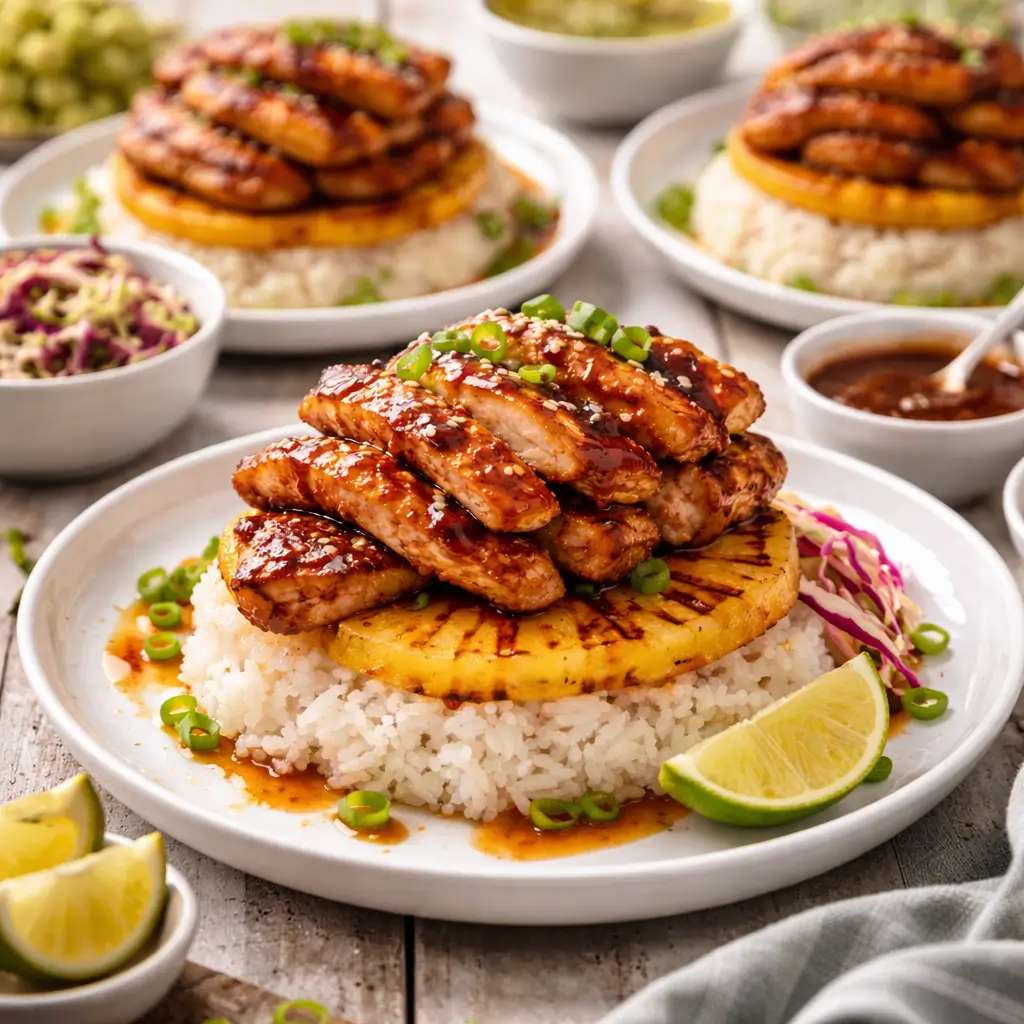
Presentation plays an important role in making a hawaiian huli huli chicken stack visually appealing and satisfying. Because this dish is built in layers, thoughtful plating enhances both structure and overall dining experience.
Individual Plated Stacks
For dinner gatherings, assemble each hawaiian huli huli chicken stack using a metal ring mold. Press the rice firmly at the base, layer sliced chicken evenly, then add pineapple and vegetables. Carefully lift the mold to reveal clean edges. Garnish with green onions and sesame seeds for a polished finish.
Family Style Presentation
If serving casually, build a larger hawaiian huli huli chicken stack on a wide platter. Slice portions at the table so guests can see the layered structure. This approach keeps the dish approachable while still visually impressive.
Sauce Finishing Technique
Instead of pouring sauce over the entire stack, lightly drizzle glaze around the plate. This keeps the layers intact while enhancing flavor. Too much sauce can cause the hawaiian huli huli chicken stack to lose definition.
Texture and Color Balance
Aim for visual contrast:
- Golden brown grilled chicken
- Bright yellow pineapple
- White or lightly toasted rice
- Fresh green garnish
A well presented hawaiian huli huli chicken stack should look structured, colorful, and balanced, reflecting the harmony of sweet, smoky, and savory flavors in every layer.
Frequently Asked Questions About hawaiian huli huli chicken stack
Understanding the background and flexibility of hawaiian huli huli chicken stack helps home cooks prepare it with confidence. Below are answers to common questions people ask when learning about this dish.
What does “huli huli” mean?
“Huli” means “turn” in Hawaiian. The phrase refers to the traditional grilling method where chicken is turned repeatedly over an open flame. In a hawaiian huli huli chicken stack, this turning technique helps create even caramelization and prevents burning while building smoky flavor.
Can it be baked instead of grilled?
Yes. Although grilling gives the most authentic flavor, hawaiian huli huli chicken stack can be prepared in the oven. Baking at 400°F and finishing under the broiler helps mimic the caramelized exterior that grilling provides.
What sides pair best with it?
Traditional sides include macaroni salad and steamed rice. For lighter options, cucumber salad or grilled vegetables pair well with hawaiian huli huli chicken stack without overpowering its sweet savory profile.
Can I make it ahead of time?
Yes. You can cook the chicken and prepare the components separately, then assemble the hawaiian huli huli chicken stack just before serving to maintain texture.
Is it very sweet?
The dish balances sweetness with savory and tangy elements. When prepared properly, hawaiian huli huli chicken stack should taste balanced rather than overly sugary.
Final Thoughts on Flavor and Tradition
A well prepared hawaiian huli huli chicken stack brings together tradition, balance, and thoughtful presentation. Rooted in classic Hawaiian grilling techniques, this dish transforms simple marinated chicken into a structured meal that highlights texture and contrast.
What makes hawaiian huli huli chicken stack especially appealing in the United States is its adaptability. It can be grilled outdoors for authentic smoky depth or baked indoors for convenience. The marinade delivers the signature sweet and savory profile, while the layered format allows home cooks to personalize ingredients without losing the dish’s core identity.
When building hawaiian huli huli chicken stack, the key is balance caramelized chicken, sturdy rice, sweet pineapple, and crisp fresh toppings. Each layer should contribute flavor without overwhelming the others.
By respecting its traditional roots while embracing modern presentation, hawaiian huli huli chicken stack becomes more than a meal. It becomes a thoughtful combination of heritage cooking and contemporary plating, suitable for both casual family dinners and visually appealing gatherings.
Conclusion
A well balanced hawaiian huli huli chicken stack brings together tradition, flavor, and thoughtful presentation in one structured dish. Inspired by classic Hawaiian roadside grilling, it transforms sweet savory marinated chicken into a layered meal that feels both comforting and visually appealing. The key lies in proper marination, controlled heat, and balanced assembly.
By combining caramelized grilled chicken, sturdy rice, grilled pineapple, and fresh toppings, the dish achieves contrast in texture and harmony in flavor. Whether grilled outdoors or baked indoors, the technique remains approachable for home cooks across the United States.
Attention to detail makes the difference. Even slicing, moderate glaze application, and stable layering ensure the stack holds its shape while delivering bold island inspired taste in every bite.
Ultimately, hawaiian huli huli chicken stack offers more than presentation. It preserves the spirit of traditional huli huli cooking while adapting to modern kitchens, making it a versatile and satisfying meal suitable for both everyday dinners and special gatherings.
FAQ
1. What does huli huli mean in Hawaiian cooking?
“Huli” means “turn” in Hawaiian. The phrase comes from the traditional method of grilling chicken between two grates and repeatedly flipping it over open flames. This turning process helps create even caramelization while preventing burning. In modern home cooking, the term still refers to that signature sweet savory grilled chicken style. The stack variation keeps the same flavor foundation while presenting it in layered form for structure and visual appeal.
2. Can hawaiian huli huli chicken stack be baked instead of grilled?
Yes, it can be baked if grilling is not available. Bake at 400°F until the internal temperature reaches 165°F, then broil briefly to caramelize the glaze. While baking produces slightly less smoky flavor than grilling, the sweet and savory marinade still develops depth. Resting the chicken before slicing helps preserve moisture when assembling the layered stack.
3. What type of chicken works best?
Boneless skinless chicken thighs are generally preferred because they remain juicy and flavorful after grilling. Chicken breasts can also be used for a leaner option, but they require careful cooking to avoid dryness. Thighs provide better caramelization and tenderness, which helps maintain texture when layered in the stack.
4. What sides pair well with this dish?
Traditional Hawaiian style macaroni salad and steamed white rice are classic choices. For lighter options, cucumber salad, grilled vegetables, or a citrus dressed green salad complement the sweet savory flavor profile. The goal is to balance richness with freshness so the main dish remains the centerpiece.
5. Can it be prepared ahead of time?
Yes. Marinate the chicken overnight and store cooked components separately. Reheat gently and assemble just before serving. Keeping rice, chicken, pineapple, and slaw separate prevents sogginess and preserves texture. Proper storage ensures the final stack maintains structure and flavor when served.
Follow us Facebook
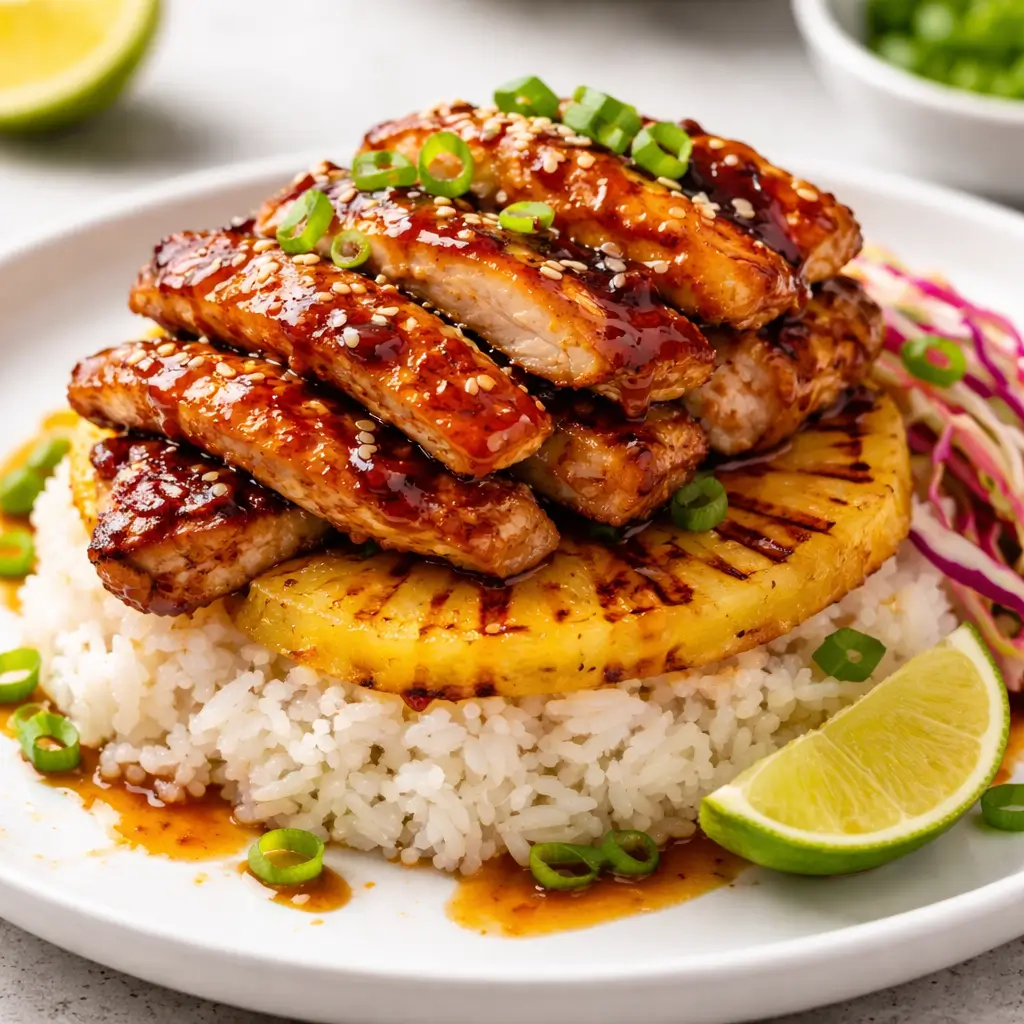
hawaiian huli huli chicken stack
Ingredients
Equipment
Method
- Whisk soy sauce, pineapple juice, brown sugar, ketchup, garlic, ginger, vinegar, and sesame oil.
- Marinate chicken for at least 4 hours.
- Preheat grill to medium heat.
- Grill chicken 5–7 minutes per side until internal temperature reaches 165°F.
- Rest chicken 5 minutes, then slice evenly.
- Press rice into serving mold.
- Layer sliced chicken over rice.
- Add grilled pineapple and cabbage.
- Garnish with green onions and serve immediately.
Notes
- Marinate chicken at least 4 hours for best flavor; overnight gives deeper results.
- Do not cook over high heat, as the sugars in the marinade can burn quickly.
- Let the chicken rest 5 to 10 minutes before slicing to keep it juicy.
- Assemble the stack just before serving to maintain texture and structure.
- Leftovers can be stored separately in airtight containers for up to 3 days.